loading

Messages are loaded...

News from Saxony

Digital citizen participation makes it possible to have a say in municipal decisions from the comfort of your own home. A study by TU Dresden shows that medium-sized and small towns in eastern Germany are leading the way. © pixabay/Firmbee

East German cities are pioneers in digital citizen participation

Where can citizens have the most say online? A study by TU Dresden and Leipzig University shows surprising regional differences in digital citizen participation in Germany. East German medium-sized and small towns are leading the way, while West Germany leads the way in large cities. Over 2,000 municipalities took part in the survey.

Almost every second private investor uses ChatGPT to find out about investments. Researchers at HHL Leipzig have investigated how reliable the answers are. © pixabay/Sergei Tokmakov

Why the file format determines the success of ChatGPT

Almost every second private investor uses ChatGPT for financial data. But how reliable are the answers? Researchers at HHL Leipzig have investigated where the AI gets its information from. Their conclusion: the file format makes the decisive difference. HTML reports appear three times more frequently and lead to more correct results than PDFs.

Saxon fish soup à la bouillabaisse - fine fish in fine porcelain (Image: Ulrich van Stipriaan)

The Saxon fish soup is awesome

Restaurant review: Caroussel Nouvelle in the Bülow Palais in Dresden - French-influenced bistro menu, Saxon fish soup as a highlight and sophisticated wine accompaniment in a tasteful ambience.

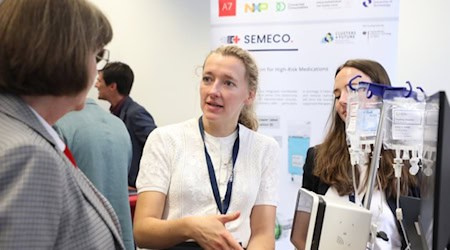
Nora Herzog from the SEMECO sub-project SmartInfusions explains the networked infusion system that enables safer and automated therapies. Anja Stübner/EKFZ

From infusion to ultrasound: 15 million euros for smart medical technology from Dresden

Tiny chips are to make therapies safer and save lives. The Dresden research project SEMECO is receiving a further 15 million euros from the federal government. Together with industrial partners, TU Dresden is developing medical semiconductors for networked infusion systems, portable ultrasound devices and smart implants. The modular approach is intended to bring medical products to market more quickly.

Lowland tapir in the Pantanal: The researchers in Görlitz use movement data of such animals to better assess their chances of survival. M. Zanferrari/Wikimedia Commons, CC BY-SA 2.0

How animal movements influence the survival of entire species

A new road cuts through the habitat of endangered tapirs. Will the population survive? Researchers from CASUS in Görlitz have developed a new model with Brazilian colleagues that can answer such questions. For the first time, it links the movement patterns of individual animals with the dynamics of entire populations - an important step for species conservation.

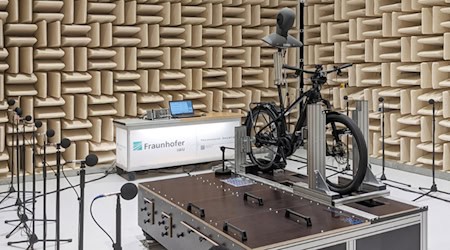
An e-bike is tested for disturbing noises on the test bench at the Fraunhofer IWU Dresden. The technology detects where rattling or buzzing occurs. Fraunhofer IWU

No more annoying bike noises

Rattling and cracking noises spoil the joy of a new e-bike. Researchers at the Fraunhofer IWU Dresden have developed a test bench that detects annoying noises at the prototype stage. This enables manufacturers to optimize their premium bikes in a targeted manner and bring them to series production.