
loading

Powěsće so přeprošuja...

Various News - Latest news from different areas

Latest news from Saxony, Dresden, Chemnitz and Leipzig for foreign visitors and employees in Saxony.

Construction machinery such as this bulldozer will run on the new hydrogen engine from Zwickau in the future. © pixabay/Dimitris Vetsikas

Clean construction sites: Zwickau engine for heavy machinery

Researchers at Zwickau University of Applied Sciences are developing an innovative hydrogen engine that emits hardly any pollutants. With three million euros in funding from the Free State of Saxony and the EU, a drive system for ships, power plants and construction machinery will be created by 2027. The special feature: The engine is designed from the ground up for hydrogen and operates almost emission-free even without an exhaust catalytic converter.
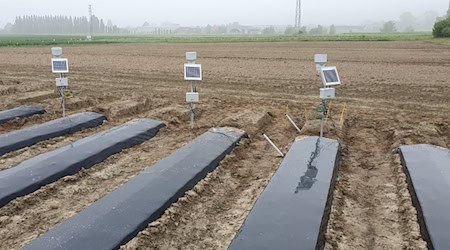
How quickly do the new films decompose? The researchers test the biodegradability in the test setup. © Inagro vzw

Mulch films made of cellulose to protect soils from microplastics

Every year, thousands of tons of plastic film are left behind in Europe's fields, polluting the soil with microplastics. Together with European partners, the Fraunhofer FEP in Dresden is developing an innovative solution: mulch films made of cellulose that decompose themselves after harvesting. Particularly clever: special structures channel water directly to the plants and are intended to quadruple water use.

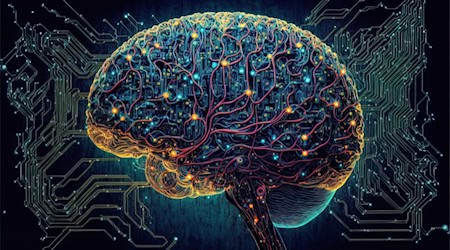
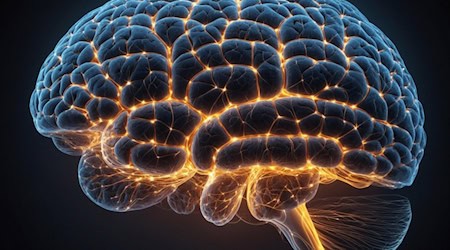
The human brain automates routines and thus saves energy. Researchers at Chemnitz University of Technology now want to transfer this principle to artificial intelligence. © pixabay/Kohji Asakawa

How our brain makes artificial intelligence smarter

Researchers at Chemnitz University of Technology and the University of Magdeburg are working on a new approach to artificial intelligence. Their model: the human brain and its ability to develop habits. AI systems should learn to automate routine tasks - and consume significantly less energy in the process.

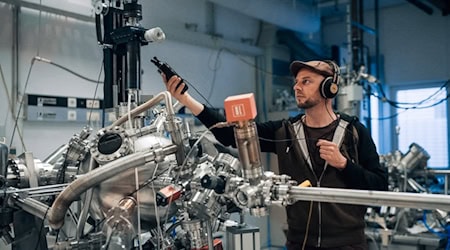
Dresden loop artist Konrad Kuechenmeister captures the sounds of quantum research. Music is created from the sounds of the labs. Tobias Ritz

Quantum vibe from the lab: Dresden musician makes research audible

A Dresden musician makes audible what quantum researchers are working on. Konrad Kuechenmeister has recorded the noises from laboratories at TU Dresden and the University of Würzburg and mixed them into a soundtrack. The loop music accompanies the Cluster of Excellence ctd.qmat into a new phase. With a focus on dynamics, 300 scientists want to develop quantum materials for green technologies and quantum computers.

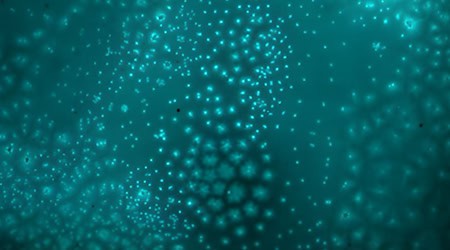
Star-shaped structures of microtubules divide the cell material in early embryos. Researchers at TU Dresden have investigated how this process works. Melissa Rinaldin

Chaos as a blueprint: How a cell becomes an organism

Every human being begins as a single cell. Researchers at TU Dresden have now deciphered how this becomes a complete organism. Their discovery: the first cell divisions function through controlled chaos. Thread-like structures called microtubules divide the cell material - although they are actually unstable. The study published in Nature also shows why different animal species use different developmental strategies.

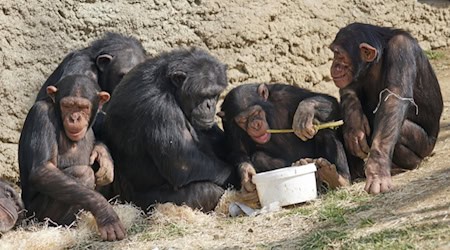
Researchers in Leipzig have shown that chimpanzees can act sustainably if they live in larger groups and treat each other with tolerance. © pixabay/Marcel Langthim

Chimpanzees share better in a group

Can apes think sustainably? Researchers at the Max Planck Institute in Leipzig have given chimpanzees a tricky task: Snack on yogurt or save it for the group? The result is surprising. Larger groups act much more cooperatively than pairs. The decisive factors are tolerance and the behavior of the leader. The findings could also be relevant for human societies.

Electric motors contain valuable rare earths. Freiberg researchers are developing processes to recover these raw materials. Stefan Mundus-Weichert

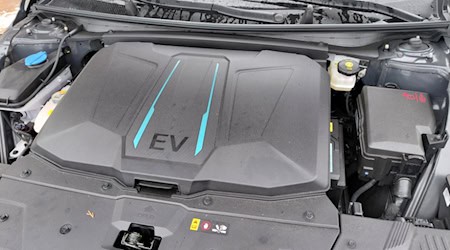
Old e-car engines become new raw materials

What happens to disused electric motors from electric cars? A new large-scale project aims to automatically recover valuable raw materials such as rare earths. TU Bergakademie Freiberg is developing new recycling processes for magnets. Robots are learning to dismantle drives. 25 partners are working on the circular economy for electromobility.

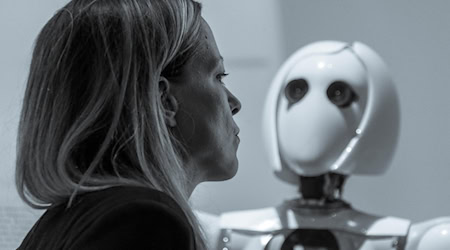
Together at work: in future, robots will be able to recognize where people are looking and adapt their behaviour accordingly. ® pixabay/wal_172619

When robots understand where we are looking

In factories, humans and robots often work side by side. But the machines do not know where their human colleague is looking. A new research group at Chemnitz University of Technology wants to change this. In future, robots will use eye-tracking technology to recognize where humans are focusing their attention. This could make collaboration safer and more efficient.

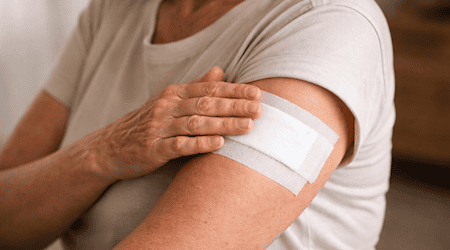
Conventional wound dressings like these cannot stop excessive inflammation. The new edition from Dresden aims to change that. © AI-generated with ChatGPT

Dresden wound dressing to stop chronic inflammation

Chronic wounds often do not heal because excessive inflammation blocks the healing process. The Leibniz Institute of Polymer Research Dresden has now spun off its tenth company. ResCure GmbH plans to launch an innovative wound dressing on the market in 2027 that neutralizes inflammatory messengers. In laboratory tests, wound healing was accelerated by up to 50 percent. A clinical trial is already underway.

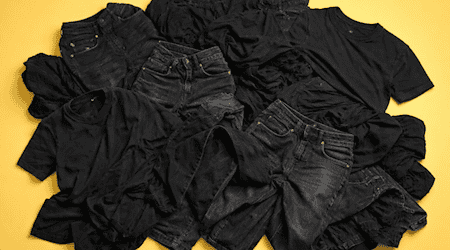
Black textiles cause major problems for sorting plants - Leipzig researchers are working on solutions. © AI-generated with ChatGPT

The black hole in textile recycling

Black T-shirts and stretch jeans usually end up in waste incineration because sorting plants cannot recognize them. Researchers at the IOM in Leipzig want to change this. In a European project, they are developing new technologies with artificial intelligence that can also sort problematic textiles. The EU is funding the project with five million euros.

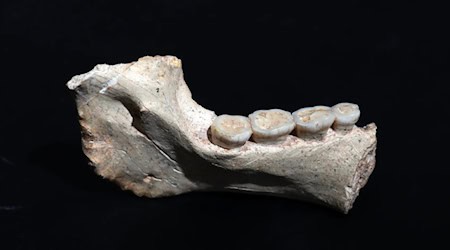
  773,000-year-old mandible from the Thomas Quarry in Morocco.  Hamza Mehimdate, Program Préhistoire de Casablanca

Revealing 773,000-year-old bones: Here lies the key to our origins

Scientists have found 773,000-year-old bones in a Moroccan quarry - from people who lived at a time when Homo sapiens and Neanderthals were just parting ways. The Max Planck Institute for Evolutionary Anthropology in Leipzig was involved in the investigation. The findings provide rare insights into our common ancestors and confirm that Africa was the cradle of humanity: Africa was the cradle of mankind.

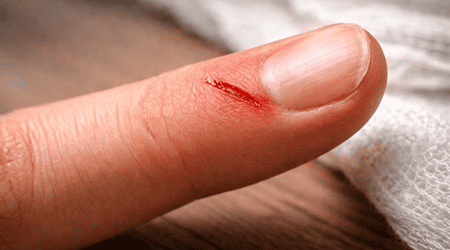
Even minor injuries can become infected and, in the worst case, lead to sepsis. Leipzig researchers want to improve the treatment of blood poisoning. © AI-generated with ChatGPT

Better treatment of blood poisoning: 7.5 million euros for project under Leipzig leadership

Every year, 75,000 people in Germany die from sepsis. Many deaths could be avoided. Leipzig University Hospital is now launching a nationwide project with 7.5 million euros in funding to improve treatment. The researchers want to digitally link all treatment data and use modern pathogen diagnostics to detect dangerous progressions earlier. Partners are university hospitals from four other cities.

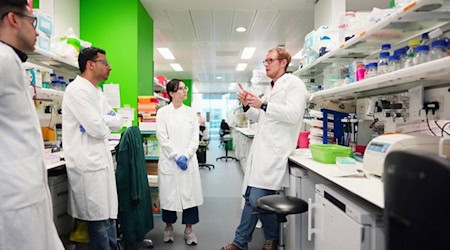
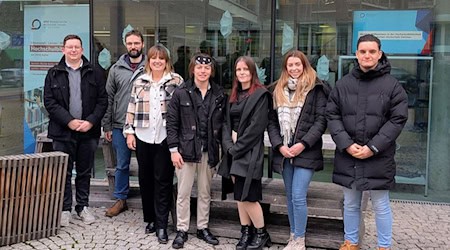
Benjamin Schumann (right) with his team at the Crick Institute. Today he is Professor of Biochemistry at the TU Dresden.  © PR/Michael Bowles

Sweet signals decoded: Biochemists track cell communication

How do cells talk to each other? A team at TU Dresden has succeeded in making the most important sensors on the cell surface visible for the first time. The so-called proteoglycans receive signals and control how cells grow and react. The new method could help to better understand cancer and develop new therapies in the future.

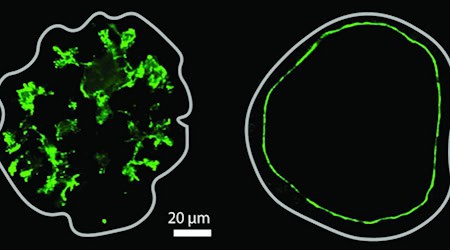
This is what cavities in the pancreas look like under the microscope: star-shaped branching on the left, round on the right. The green coloring shows the inner walls. Byung Ho Lee et al / MPI-CBG / Nature 2025

When cells exert pressure: how the pancreas grows

How does the branched network of cavities in our pancreas develop? Researchers at the Max Planck Institute of Molecular Cell Biology and Genetics in Dresden have found out using mini-organs and computer simulations. Their findings could pave the way for new therapies.

Fresh or not? The special camera analyzes the chemical composition of food in a matter of seconds. © pixabay/seolhee kim

New special camera detects rotten tomatoes and plastic counterfeits

A special kind of camera is being developed at the Fraunhofer IPMS in Dresden: it combines artificial intelligence with spectral analysis to detect the chemical properties of materials. The compact technology makes quality checks in factories, recycling plants and fields faster, more precise and more sustainable. From fresh food to single-origin plastic recycling - the development opens up numerous applications.

The junior research group "Game Change" aims to initiate sustainable technological transformations through gamification. The project is led by Prof. Tim Neumann (left). C.Zahn/WHZ

Game mechanics to help save energy

Playing your way to the energy transition: A new junior research group at the University of Applied Sciences Zwickau is investigating how gamification can help with technological change. Among other things, the researchers are developing an "Energy Tamagotchi" that makes electricity consumption visible and a digital driving trainer for energy-efficient driving. The interdisciplinary team aims to develop practical concepts for business and society by 2028.

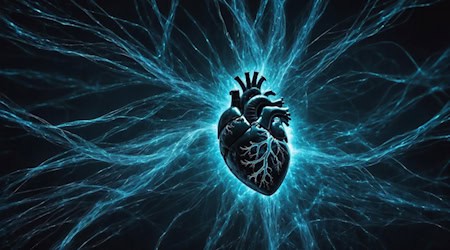
New biosensors from Leipzig visualize how heart receptors work in living cells. pixabay/Pete Linforth

How our heart processes signals: New insights into living cells

Researchers at Leipzig University have developed a new method to observe important signal receptors in cells live. Using tiny luminous molecules, they have shown for the first time in living cells how a receptor that helps control heart function works. The discovery: these receptors are not simple switches, but take on different forms depending on the active ingredient. This could enable the development of drugs with fewer side effects.

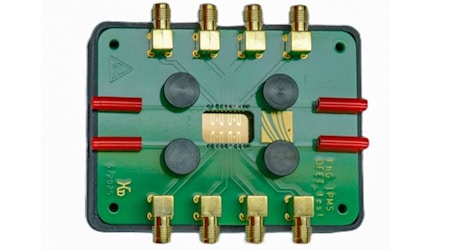
The new measuring adapter from Fraunhofer IPMS Dresden can contact and test up to eight material samples simultaneously. © Fraunhofer IPMS

New measuring adapter accelerates materials research

A new measuring adapter from Dresden is revolutionizing materials research. Researchers at Fraunhofer IPMS can use it to test eight samples simultaneously - a breakthrough for the development of displays, solar cells and sensors. The innovation saves time and accelerates the path to better electronics.

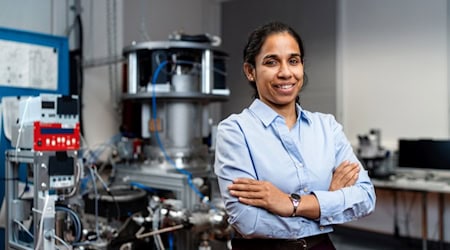
Aparajita Singha uses diamonds with defects as sensors at TU Dresden to measure magnetic signals of individual atoms. © TUD/Tobias Ritz

How flawed diamonds are advancing quantum technology

Diamonds with flaws as a tool for science: the new professor Aparajita Singha at TU Dresden uses special diamond sensors to measure magnetic signals from individual atoms. Her ambitious goal for the next five years is to carry out these measurements at room temperature - something that no one else in the world has yet managed to do. Her research in the Cluster of Excellence ctd.qmat is an important basis for future quantum computers and strengthens Saxony's position in quantum technology.

Which brain regions change with age? Mathematics reveals it. © pixabay/Pete Linforth

Leipzig team decodes brain changes with mathematics

Which brain regions change with age? Where does the brain work differently in autism? Researchers from the Max Planck Institute in Leipzig have developed a mathematical method that answers precisely these questions. A new metric identifies 108 regions that are affected by ageing and 27 regions that are altered in autism spectrum disorders. The findings could pave the way for targeted therapies.

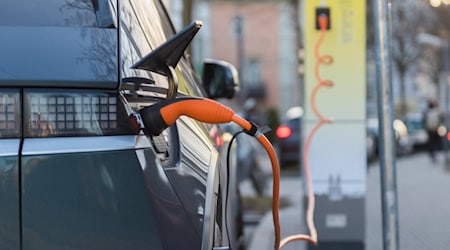
Every kilogram counts when charging tomorrow: the award-winning battery housing from Chemnitz saves weight and reduces CO2 emissions. © pixabay/Felix Müller

Chemnitz idea for battery housings: more range for electric cars

Major award for Saxon research: Chemnitz University of Technology has won one of the most important prizes in the materials industry worldwide with a new type of battery housing. It makes electric cars lighter and more climate-friendly. How does this work? With fiber-reinforced plastic instead of metal. The special feature: The housing can be produced in under two minutes and saves CO2.