
loading

Messages are loaded...

News from Saxony

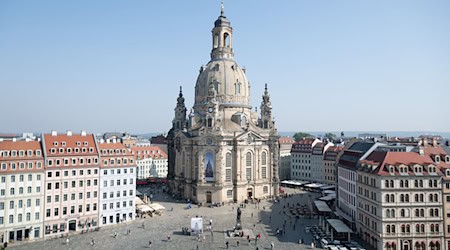
The Frauenkirche Dresden is supported by a foundation. Among other things, it is responsible for the preservation of the building. (Archive photo) / Photo: Sebastian Kahnert/dpa

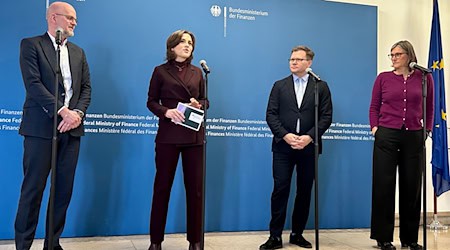
Foundation landscape in Saxony continues to grow

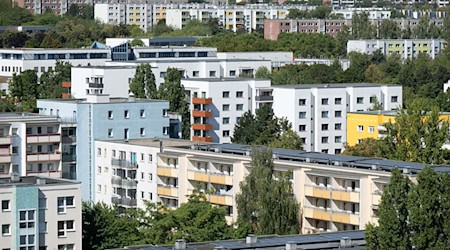
Without foundations, funding in areas such as culture, education and social affairs would be unthinkable today. There are currently 688 foundations in Saxony, with 18 new ones added last year. This will continue in 2026.

Kevin Yebo and the Niners Chemnitz Bundesliga basketball team held on to the upper hand by a wafer-thin margin in their home game against Heidelberg. (Archive picture) / Photo: Hendrik Schmidt/dpa

Niners Chemnitz win after two overtimes

The Chemnitz basketball team is moving closer to the play-off places in the Bundesliga. They will need a lot of staying power to win against Heidelberg, who are bottom of the table.

Coach Herbert Müller saw the Thüringer HC women's handball team suffer a clear defeat in the Bundesliga match against Borussia Dortmund / Photo: Sven Hoppe/dpa

Thüringer HC clearly loses top match

The Thuringian Bundesliga handball team can only hold their own against league leaders Borussia Dortmund in the first half. After the changeover, all the dams break in defense.

Not a laboratory, but a computer: the Leibniz-AI4MAT project brings materials research into the computer. IFW Dresden and IPF are jointly developing an AI infrastructure for this purpose. © AI-generated with Adobe firefly / IFW Dresden

Materials from the computer: Dresden Leibniz Institutes focus on AI

The smartphone, the solar cell, the electric car battery - each of these everyday objects is the result of years of materials research. In Dresden, two Leibniz Institutes want to radically shorten this process with artificial intelligence. Their joint project aims to predict which materials and combinations will work before the first experiment even starts.

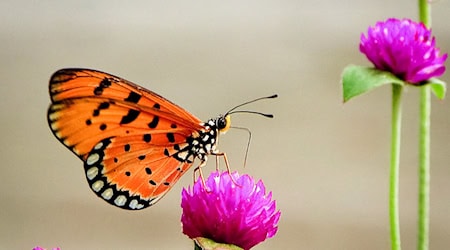
The noble butterfly Acraea terpsicore is spreading from India, Bangladesh and Sri Lanka further and further into South and Southeast Asia - and also ends up in photos taken by vacationers on their cell phones. It is precisely these images that make it an object of research. © S. Chowdhury/iDiv

Butterflies on Facebook - and research benefits

Vacation photos of colorful butterflies are not just beautiful memories - they can advance real science. Researchers from Leipzig and Jena have shown how images from social networks can help us understand the decline in biodiversity. Their result: surprisingly good.

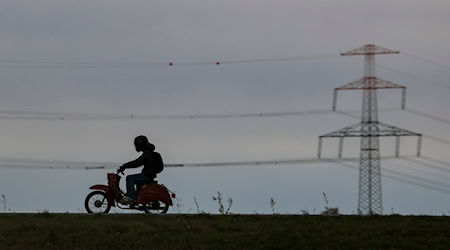
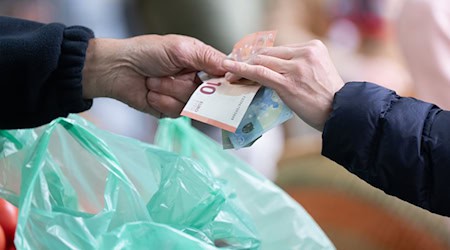
Saxony has been one of the states with particularly high inflation since 2020. (Symbolic image) / Photo: Sebastian Kahnert/dpa

Above-average rise in inflation in Saxony

Prices have risen significantly since 2020 - more than in the federal government. An Ifo analysis shows which areas have driven inflation in Saxony and why employees are still paid more in real terms.

Job center, immigration office, public order office: A large-scale study involving the University of Leipzig shows for the first time what role racism plays in German authorities. © AI-generated with ChatGPT

Racism in public authorities? New study provides comprehensive data for the first time

For some people, discrimination begins at the official counter. A major study by the University of Leipzig has investigated for the first time how racist discrimination arises and continues in German authorities. The researchers came to the conclusion that it is not just a question of individual attitudes, but also of routines and the scope for decision-making in institutions.

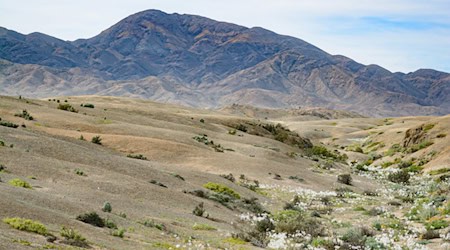
View of La Campana National Park in Chile. Here, too, the researchers investigated how non-native plants spread. José Luis Gutierrez

Diversity slows down foreign plants

Two billion people live in arid regions. Researchers from Leipzig have now investigated the conditions under which non-native plants spread around the world. Their findings: heavy grazing and nutrient-rich soils favor the invaders. A high diversity of species protects against this.