loading

Nachrichten werden geladen...

Sustainability and environmental protection in Saxony

The latest news on climate protection, the environment, sustainability and climate change in Saxony and around the world.

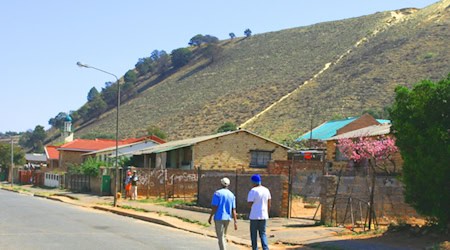
In the Witwatersrand Basin near Johannesburg, families live right next to spoil heaps from gold mining. The swirling dust contains toxic uranium. Angela Mathee

Dangerous legacy of the gold mines

Every day, dust from huge spoil tips blows into the residential areas around Johannesburg in South Africa. What many people don't know: It contains uranium. Researchers from the Helmholtz-Zentrum Dresden-Rossendorf have investigated the extent to which children living near old gold mines are exposed. The hair analyses show clear differences to children from areas without mining.

Some wolves are tracked by transmitter. (Archive image) / Photo: Arne Dedert/dpa

Wolf pup is under special observation

It had become entangled in a fence in northern Saxony. The young wolf has been roaming the Annaburger Heide ever since. After an incident, the authorities are keeping a close eye on it.

Sustainable clothing is made from pine needles at WHZ Zwickau. The researchers extract fibers from the material, which was previously considered forest waste. © pixabay/yais gao

Pine needles become clothing: Researchers develop textiles from forest waste

In Saxony's forests, pine needles normally end up unused on the ground and rot. Researchers at WHZ Zwickau are now turning them into sustainable textiles. The "ConFiTex" project is creating completely compostable yarn from local conifer needles - an innovative contribution to the circular economy that shows how forest waste can be turned into fashion.

Cell phones contain valuable raw materials. Researchers from Freiberg have an idea on how to recycle them. © pixabay Pexels

Freiberg team wins millions in funding for clever cell phone recycling

Old cell phones and computers usually end up in the trash - but they contain valuable raw materials. A team from Freiberg has now developed a clever recycling process to recover gold, copper and rare earths. The six researchers from the Helmholtz Institute convinced an international jury and secured millions in funding. Their environmentally friendly process could help to reduce dependence on critical raw material imports.