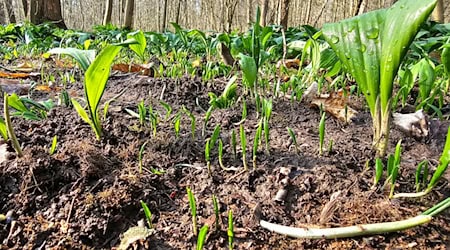
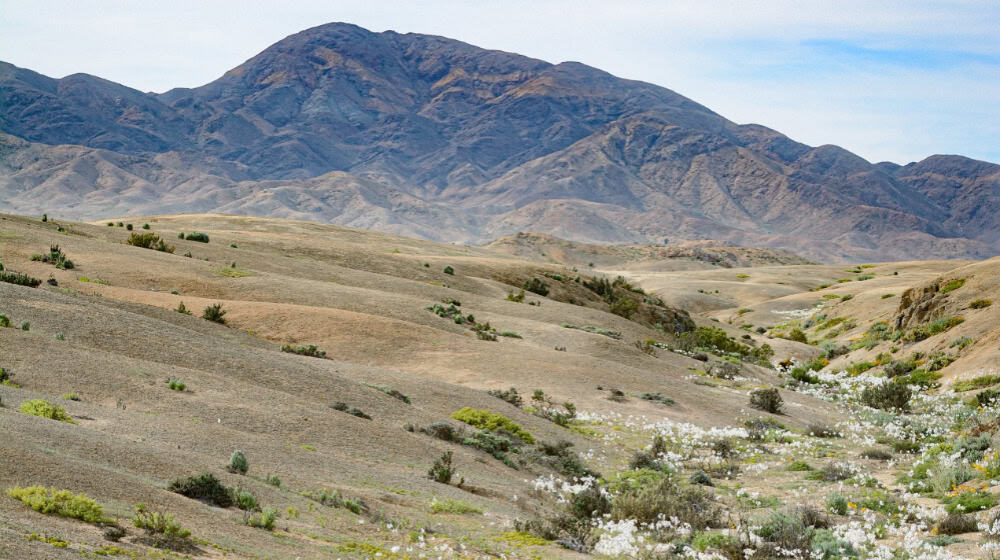
Over two billion people live in arid regions. Almost half of the earth's surface consists of these barren landscapes. This is where it is often decided whether pastures provide enough food for livestock and whether nature remains in balance. However, plants that are not originally native to these areas are increasingly spreading. Researchers at Leipzig University and the German Centre for Integrative Biodiversity Research (iDiv) have now found out what helps these invaders and what stops them.
Data from 98 areas worldwide evaluated
The scientists analyzed information from 98 study areas in 25 countries on six continents. From 2016 to 2019 they focused on perennial plants and examined 41 non-native plant species. Most of these only occurred in small quantities. Only a few were particularly common in certain areas. The result: these plants usually grow faster than native species.
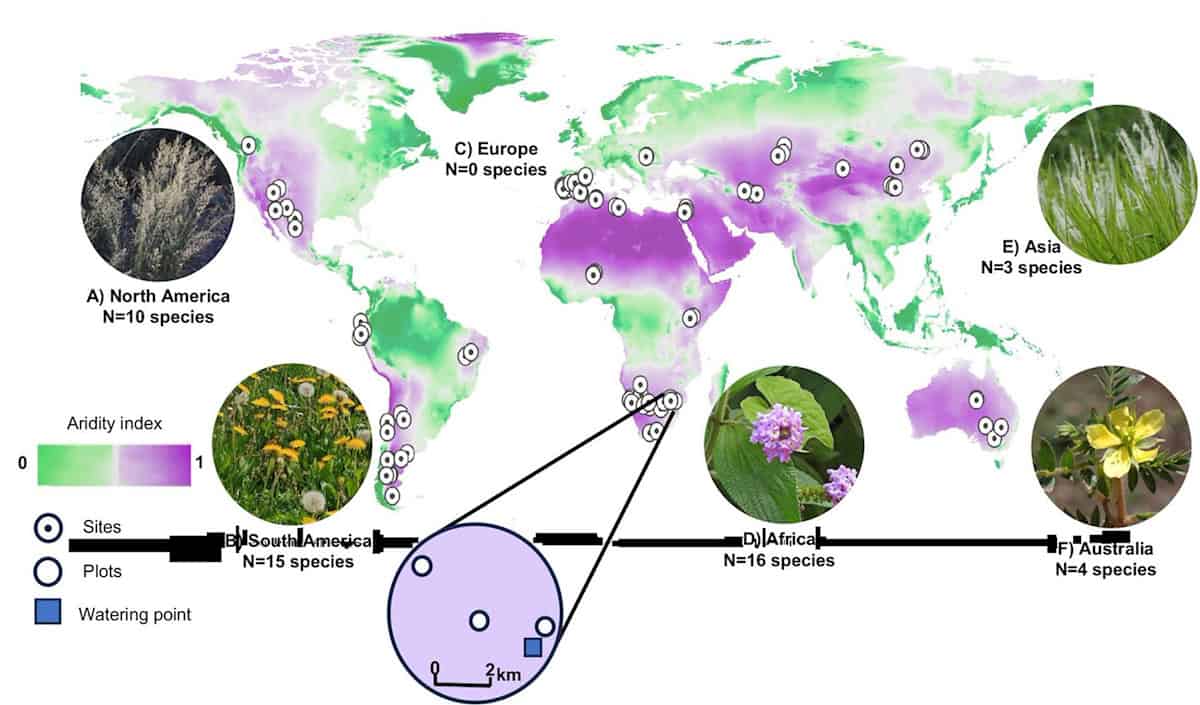
"Non-native plants have spread mainly on heavily grazed areas with nutrient-rich soil," says Dr. Soroor Rahmanian from the University of Leipzig and iDiv. These conditions are often found in less extremely dry areas and favour plants that grow quickly and can cope well with disturbances. In addition to higher soil fertility, faster decomposition rates and a greater abundance of fungi would have favored the growth of non-native plants.
Diversity of species as a natural protective shield
At the same time, the study, which was published in the journal Nature Ecology & Evolution, shows: Where many different native plant species occur, non-native species have significantly worse chances. "A high level of biodiversity protects drylands from invasive plants," explains Rahmanian.
"Despite the great ecological and social importance of drylands, we still know little about the factors that determine the success of non-native plants there," says Prof. Dr. Nico Eisenhauer from the University of Leipzig and iDiv, explaining the results. The respective local conditions are decisive.
The researchers also found that non-native plants often grow larger and can absorb more nutrients from the soil. This gives them a competitive advantage, especially on grazed, nutrient-rich areas.
Original publication:
Publication in "Nature Ecology & Evolution": "Abiotic and biotic controls of non-native perennial plant success in drylands"