
loading

Los mensajes se cargan...

Noticias sobre #University

Construction machinery such as this bulldozer will run on the new hydrogen engine from Zwickau in the future. © pixabay/Dimitris Vetsikas

Clean construction sites: Zwickau engine for heavy machinery

Researchers at Zwickau University of Applied Sciences are developing an innovative hydrogen engine that emits hardly any pollutants. With three million euros in funding from the Free State of Saxony and the EU, a drive system for ships, power plants and construction machinery will be created by 2027. The special feature: The engine is designed from the ground up for hydrogen and operates almost emission-free even without an exhaust catalytic converter.

The human brain automates routines and thus saves energy. Researchers at Chemnitz University of Technology now want to transfer this principle to artificial intelligence. © pixabay/Kohji Asakawa

How our brain makes artificial intelligence smarter

Researchers at Chemnitz University of Technology and the University of Magdeburg are working on a new approach to artificial intelligence. Their model: the human brain and its ability to develop habits. AI systems should learn to automate routine tasks - and consume significantly less energy in the process.

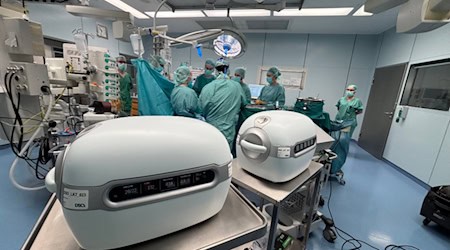
The German Organ Transplantation Foundation uses special transport devices for mechanical perfusion. Two of these were used for kidney transplants at the UKL. © UKL

Premiere in Germany: Kidneys travel with high-tech care

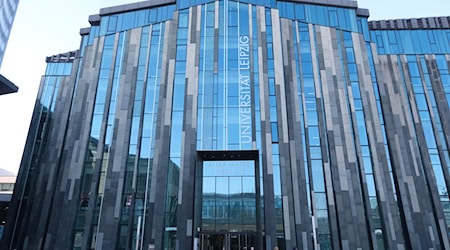
Leipzig University Hospital was the first clinic in Germany to perform two kidney transplants using a new method. With mechanical perfusion, the organs are continuously supplied with nutrients during transportation. The procedure is intended to reduce damage to the transplant and increase patient safety.

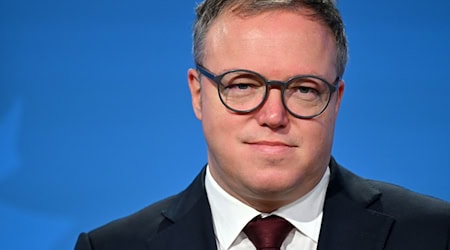
Voigt reacted with incomprehension to the revocation of his doctorate. (Archive photo) / Photo: Martin Schutt/dpa

Voigt to lose doctorate - lawsuit announced

Chemnitz University of Technology withdraws Mario Voigt's doctorate. Unjustly, says the Minister President and wants to take legal action. He criticizes new evaluation standards in the ongoing procedure.

According to a study conducted in Leipzig, the majority of Germans are in favor of expanding the Bundeswehr. © Colorbox

Survey shows: Majority of Germans want a stronger defense

What do Germans think about defense and security? Researchers from the University of Leipzig and the Technical University of Munich surveyed over 1,000 people. The results show a clear desire for reform: The majority want to expand the Bundeswehr in terms of personnel and strengthen its defense capabilities. The high level of support for a joint European army is particularly remarkable. Almost two thirds of respondents fear a military conflict with Russia.

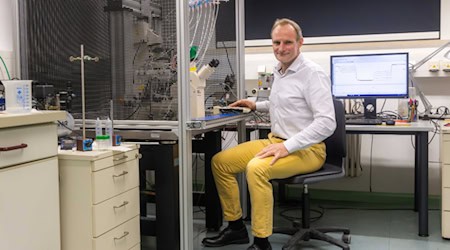
Prof. Dr. Michael © Schaefer and his team developed light-controlled switches for bodily functions. University of Leipzig/Swen Reichhold

Saxon researchers switch bodily functions on and off with light

Violet light on, blue light off: Researchers at Leipzig University and TU Dresden have developed molecular switches that control bodily functions using light pulses. The scientists can use them to activate nerve cells, regulate adrenaline release and control intestinal movements. The new method could help to better understand diseases and develop new therapies.

The GEW trade union is calling for warning strikes at Saxony's universities. (Symbolic image) / Photo: Jennifer Brückner/dpa

GEW warning strike at universities

A warning strike is to take place at Saxony's universities this week. The GEW union is demanding higher wages and a collective agreement for student employees.

Quick help is needed in the event of a stroke. In the days that follow, some people suffer a second one. A new therapy should help. © pixabay/Alexander Fox | PlaNet Fox

Dresden doctors test new therapy against second stroke

Around one in three stroke patients suffers a relapse - often just a few days after the initial cerebral infarction. Doctors at TU Dresden are now starting a large nationwide study with 2,100 participants. They want to find out whether a combination of two drugs provides better protection against a second stroke than the current standard therapy. The Federal Ministry of Research is funding the project with three million euros.

Even minor injuries can become infected and, in the worst case, lead to sepsis. Leipzig researchers want to improve the treatment of blood poisoning. © AI-generated with ChatGPT

Better treatment of blood poisoning: 7.5 million euros for project under Leipzig leadership

Every year, 75,000 people in Germany die from sepsis. Many deaths could be avoided. Leipzig University Hospital is now launching a nationwide project with 7.5 million euros in funding to improve treatment. The researchers want to digitally link all treatment data and use modern pathogen diagnostics to detect dangerous progressions earlier. Partners are university hospitals from four other cities.

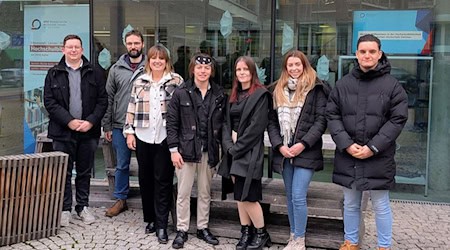
The junior research group "Game Change" aims to initiate sustainable technological transformations through gamification. The project is led by Prof. Tim Neumann (left). C.Zahn/WHZ

Game mechanics to help save energy

Playing your way to the energy transition: A new junior research group at the University of Applied Sciences Zwickau is investigating how gamification can help with technological change. Among other things, the researchers are developing an "Energy Tamagotchi" that makes electricity consumption visible and a digital driving trainer for energy-efficient driving. The interdisciplinary team aims to develop practical concepts for business and society by 2028.

New biosensors from Leipzig visualize how heart receptors work in living cells. pixabay/Pete Linforth

How our heart processes signals: New insights into living cells

Researchers at Leipzig University have developed a new method to observe important signal receptors in cells live. Using tiny luminous molecules, they have shown for the first time in living cells how a receptor that helps control heart function works. The discovery: these receptors are not simple switches, but take on different forms depending on the active ingredient. This could enable the development of drugs with fewer side effects.

Sustainable clothing is made from pine needles at WHZ Zwickau. The researchers extract fibers from the material, which was previously considered forest waste. © pixabay/yais gao

Pine needles become clothing: Researchers develop textiles from forest waste

In Saxony's forests, pine needles normally end up unused on the ground and rot. Researchers at WHZ Zwickau are now turning them into sustainable textiles. The "ConFiTex" project is creating completely compostable yarn from local conifer needles - an innovative contribution to the circular economy that shows how forest waste can be turned into fashion.

Normal weight does not always mean healthy. A new test from Leipzig shows a hidden risk. © pixabay/Rafif Al Hashmi

Slim and still ill? New index exposes hidden risk

Normal weight does not automatically mean healthy. Researchers in Leipzig have developed a new index that reveals hidden metabolic disorders. The metabolic BMI analyzes the blood and shows: One in three slim people has a greatly increased risk of diabetes and fatty liver. Intestinal bacteria play an important role in this.
A new system enables precise images of animals in motion. / Photo: Jennifer Brückner/dpa

X-ray images of animals in motion

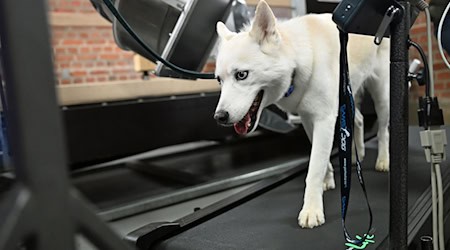
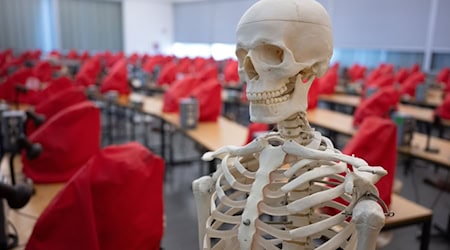
What causes back pain in dogs or broken bones in laying hens? Researchers in Leipzig are looking for answers in a new movement laboratory.

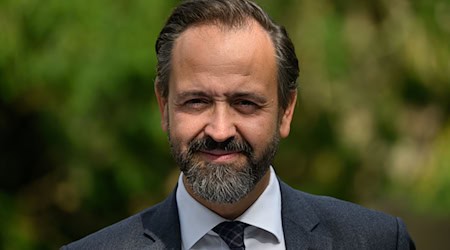
Science Minister Sebastian Gemkow sees potential for cooperation with Chilean research institutions. (Archive image) / Photo: Robert Michael/dpa

Saxony attracts students from Chile

Saxony presents itself worldwide as a federal state with good study conditions. As of now, there is also a contact point for prospective students in South America - in the Chilean capital.

In Saxony, the number of Bafög recipients has fallen slightly. (Symbolic image) / Photo: Andrea Warnecke/dpa

Fewer Bafög recipients in Saxony

The funding is intended to help young people with their training and increase their chances in professional life. It is now apparent that fewer students are taking advantage of the funding.

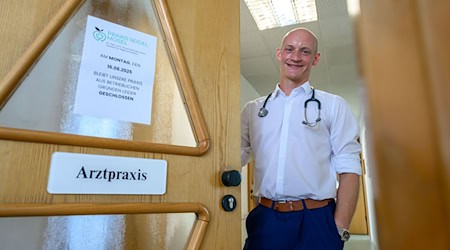
Now looking after patients in the Mosel district of Zwickau: Family doctor Maximilian Braun / Photo: Hendrik Schmidt/dpa

Doctor training in Hungary: project bears first fruits

To alleviate the shortage of doctors, Saxony is having young doctors trained in Hungary. The program currently has more than 200 participants, and the first graduate is now starting his regular career as a family doctor.

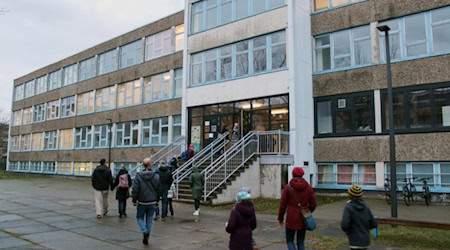
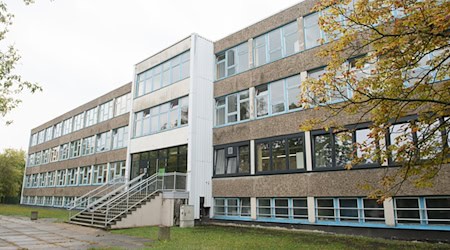
Pupils at Dresden University School have been studying in an old GDR building since 2019 and in an additional container building since 2022. Capacities are once again overstretched. Photo: Jeremy Göhler for Dresden University School

New building for Dresden University School delayed - Structural Commission sounds the alarm

Once again, the planned start of construction for a learning building for Dresden University School has been postponed. The current situation has prompted a public statement from the Dresden University School's Structure and Evaluation Commission. Until the new building planned for 2029/30 is completed, the committee criticizes that research and learning are suffering under precarious conditions.

Pupils at Dresden University School have been studying in an old GDR building since 2019 and in an additional container building since 2022. Capacities are once again overstretched. Photo: Jeremy Göhler for Dresden University School

Learning center for Dresden University School delayed - structural commission sounds the alarm

Once again, the planned start of construction for a learning building for Dresden University School has been postponed. The current situation has prompted a public statement from the Dresden University School's Structure and Evaluation Commission. Until the new building planned for 2029/30 is completed, the committee criticizes that research and learning are suffering under precarious conditions.

"The motivation for change and further development is unbroken." - Dresden University School trial starts its sixth year

In the 2024/25 school year, around 830 students in grades 1 to 10 from the entire Dresden city area and neighboring communities will attend the Dresden University School. Innovative teaching-learning formats and a contemporary school organization are being tested and researched in the school trial by the Technische Universität Dresden (TUD) and the city of Dresden. The focus of school development is now moving away from the organization of teaching in the younger grades towards the development of structures in the final grades. For the second time in the school's young history, final examinations will be held in the beginning school year, and for the first time, the young people in the qualification level will also be preparing for the Realschule examination. The integration of the Ukrainian pupils and teachers into the school community is also progressing.