loading

Nachrichten werden geladen...

News zu #research

Construction machinery such as this bulldozer will run on the new hydrogen engine from Zwickau in the future. © pixabay/Dimitris Vetsikas

Clean construction sites: Zwickau engine for heavy machinery

Researchers at Zwickau University of Applied Sciences are developing an innovative hydrogen engine that emits hardly any pollutants. With three million euros in funding from the Free State of Saxony and the EU, a drive system for ships, power plants and construction machinery will be created by 2027. The special feature: The engine is designed from the ground up for hydrogen and operates almost emission-free even without an exhaust catalytic converter.

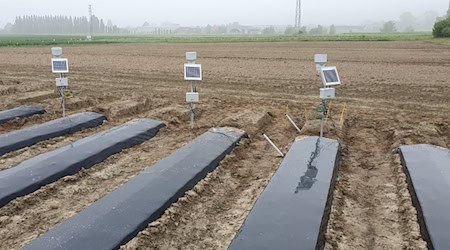
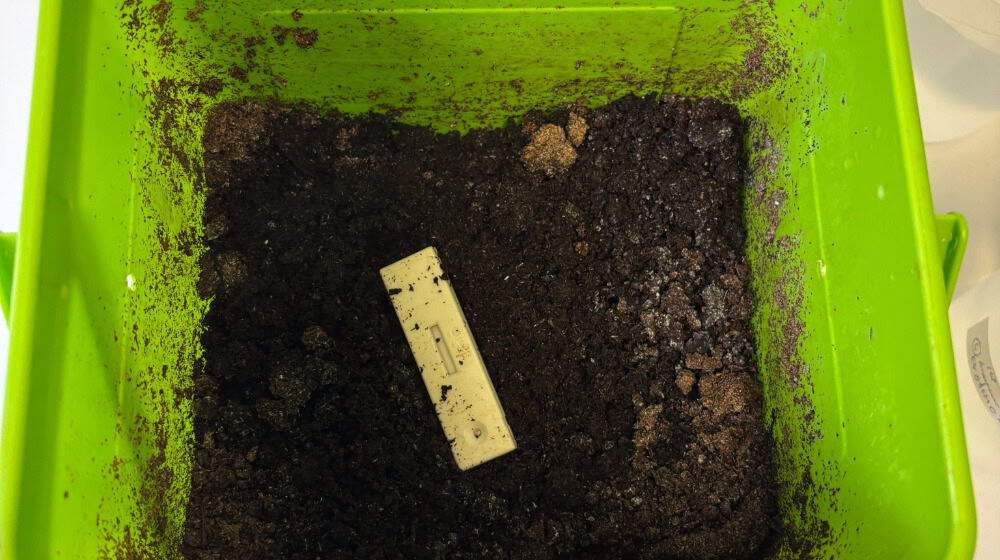
How quickly do the new films decompose? The researchers test the biodegradability in the test setup. © Inagro vzw

Mulch films made of cellulose to protect soils from microplastics

Every year, thousands of tons of plastic film are left behind in Europe's fields, polluting the soil with microplastics. Together with European partners, the Fraunhofer FEP in Dresden is developing an innovative solution: mulch films made of cellulose that decompose themselves after harvesting. Particularly clever: special structures channel water directly to the plants and are intended to quadruple water use.

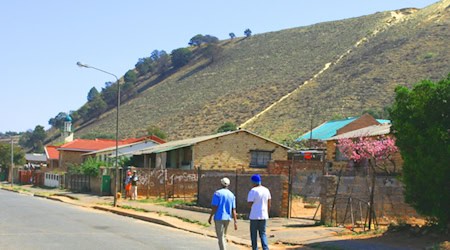
In the Witwatersrand Basin near Johannesburg, families live right next to spoil heaps from gold mining. The swirling dust contains toxic uranium. Angela Mathee

Dangerous legacy of the gold mines

Every day, dust from huge spoil tips blows into the residential areas around Johannesburg in South Africa. What many people don't know: It contains uranium. Researchers from the Helmholtz-Zentrum Dresden-Rossendorf have investigated the extent to which children living near old gold mines are exposed. The hair analyses show clear differences to children from areas without mining.

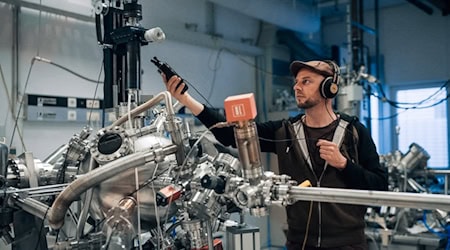
Dresden loop artist Konrad Kuechenmeister captures the sounds of quantum research. Music is created from the sounds of the labs. Tobias Ritz

Quantum vibe from the lab: Dresden musician makes research audible

A Dresden musician makes audible what quantum researchers are working on. Konrad Kuechenmeister has recorded the noises from laboratories at TU Dresden and the University of Würzburg and mixed them into a soundtrack. The loop music accompanies the Cluster of Excellence ctd.qmat into a new phase. With a focus on dynamics, 300 scientists want to develop quantum materials for green technologies and quantum computers.

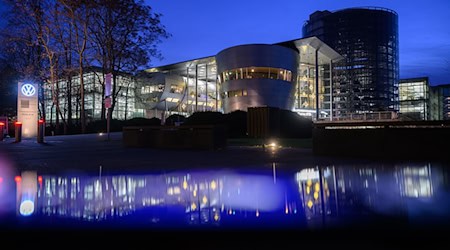
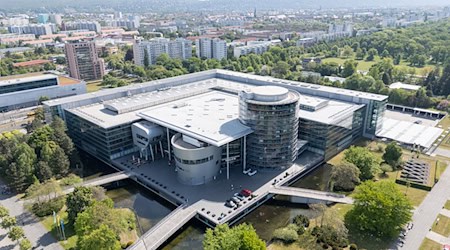
VW's Transparent Factory will once again be welcoming visitors to the future innovation campus from Thursday (archive photo).  / Photo: Robert Michael/dpa

Transparent factory welcomes guests again

The days of the VW Manufaktur Dresden as a car production site are history. The site is to become an innovation campus. However, visitors can still immerse themselves in the world of automotive engineering.

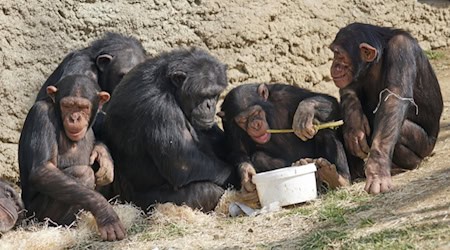
Researchers in Leipzig have shown that chimpanzees can act sustainably if they live in larger groups and treat each other with tolerance. © pixabay/Marcel Langthim

Chimpanzees share better in a group

Can apes think sustainably? Researchers at the Max Planck Institute in Leipzig have given chimpanzees a tricky task: Snack on yogurt or save it for the group? The result is surprising. Larger groups act much more cooperatively than pairs. The decisive factors are tolerance and the behavior of the leader. The findings could also be relevant for human societies.

According to a study conducted in Leipzig, the majority of Germans are in favor of expanding the Bundeswehr. © Colorbox

Survey shows: Majority of Germans want a stronger defense

What do Germans think about defense and security? Researchers from the University of Leipzig and the Technical University of Munich surveyed over 1,000 people. The results show a clear desire for reform: The majority want to expand the Bundeswehr in terms of personnel and strengthen its defense capabilities. The high level of support for a joint European army is particularly remarkable. Almost two thirds of respondents fear a military conflict with Russia.

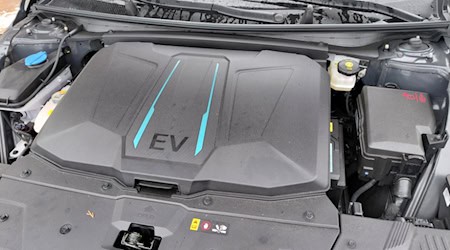
Electric motors contain valuable rare earths. Freiberg researchers are developing processes to recover these raw materials. Stefan Mundus-Weichert

Old e-car engines become new raw materials

What happens to disused electric motors from electric cars? A new large-scale project aims to automatically recover valuable raw materials such as rare earths. TU Bergakademie Freiberg is developing new recycling processes for magnets. Robots are learning to dismantle drives. 25 partners are working on the circular economy for electromobility.

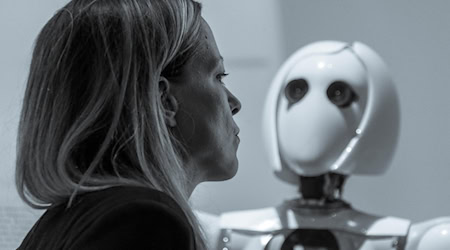
Together at work: in future, robots will be able to recognize where people are looking and adapt their behaviour accordingly. ® pixabay/wal_172619

When robots understand where we are looking

In factories, humans and robots often work side by side. But the machines do not know where their human colleague is looking. A new research group at Chemnitz University of Technology wants to change this. In future, robots will use eye-tracking technology to recognize where humans are focusing their attention. This could make collaboration safer and more efficient.

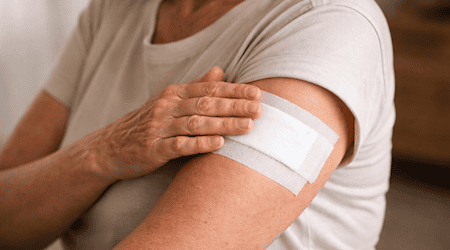
Conventional wound dressings like these cannot stop excessive inflammation. The new edition from Dresden aims to change that. © AI-generated with ChatGPT

Dresden wound dressing to stop chronic inflammation

Chronic wounds often do not heal because excessive inflammation blocks the healing process. The Leibniz Institute of Polymer Research Dresden has now spun off its tenth company. ResCure GmbH plans to launch an innovative wound dressing on the market in 2027 that neutralizes inflammatory messengers. In laboratory tests, wound healing was accelerated by up to 50 percent. A clinical trial is already underway.

Prof. Dr. Michael © Schaefer and his team developed light-controlled switches for bodily functions. University of Leipzig/Swen Reichhold

Saxon researchers switch bodily functions on and off with light

Violet light on, blue light off: Researchers at Leipzig University and TU Dresden have developed molecular switches that control bodily functions using light pulses. The scientists can use them to activate nerve cells, regulate adrenaline release and control intestinal movements. The new method could help to better understand diseases and develop new therapies.

Black textiles cause major problems for sorting plants - Leipzig researchers are working on solutions. © AI-generated with ChatGPT

The black hole in textile recycling

Black T-shirts and stretch jeans usually end up in waste incineration because sorting plants cannot recognize them. Researchers at the IOM in Leipzig want to change this. In a European project, they are developing new technologies with artificial intelligence that can also sort problematic textiles. The EU is funding the project with five million euros.

Quick help is needed in the event of a stroke. In the days that follow, some people suffer a second one. A new therapy should help. © pixabay/Alexander Fox | PlaNet Fox

Dresden doctors test new therapy against second stroke

Around one in three stroke patients suffers a relapse - often just a few days after the initial cerebral infarction. Doctors at TU Dresden are now starting a large nationwide study with 2,100 participants. They want to find out whether a combination of two drugs provides better protection against a second stroke than the current standard therapy. The Federal Ministry of Research is funding the project with three million euros.

Even minor injuries can become infected and, in the worst case, lead to sepsis. Leipzig researchers want to improve the treatment of blood poisoning. © AI-generated with ChatGPT

Better treatment of blood poisoning: 7.5 million euros for project under Leipzig leadership

Every year, 75,000 people in Germany die from sepsis. Many deaths could be avoided. Leipzig University Hospital is now launching a nationwide project with 7.5 million euros in funding to improve treatment. The researchers want to digitally link all treatment data and use modern pathogen diagnostics to detect dangerous progressions earlier. Partners are university hospitals from four other cities.

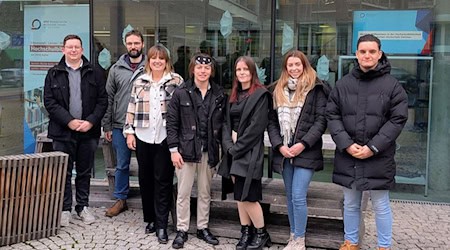
Benjamin Schumann (right) with his team at the Crick Institute. Today he is Professor of Biochemistry at the TU Dresden.  © PR/Michael Bowles

Sweet signals decoded: Biochemists track cell communication

How do cells talk to each other? A team at TU Dresden has succeeded in making the most important sensors on the cell surface visible for the first time. The so-called proteoglycans receive signals and control how cells grow and react. The new method could help to better understand cancer and develop new therapies in the future.

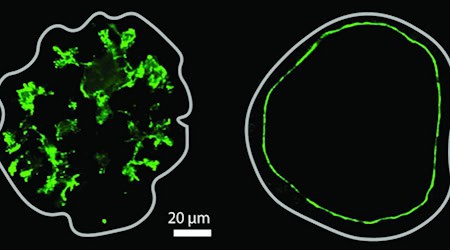
This is what cavities in the pancreas look like under the microscope: star-shaped branching on the left, round on the right. The green coloring shows the inner walls. Byung Ho Lee et al / MPI-CBG / Nature 2025

When cells exert pressure: how the pancreas grows

How does the branched network of cavities in our pancreas develop? Researchers at the Max Planck Institute of Molecular Cell Biology and Genetics in Dresden have found out using mini-organs and computer simulations. Their findings could pave the way for new therapies.

Fresh or not? The special camera analyzes the chemical composition of food in a matter of seconds. © pixabay/seolhee kim

New special camera detects rotten tomatoes and plastic counterfeits

A special kind of camera is being developed at the Fraunhofer IPMS in Dresden: it combines artificial intelligence with spectral analysis to detect the chemical properties of materials. The compact technology makes quality checks in factories, recycling plants and fields faster, more precise and more sustainable. From fresh food to single-origin plastic recycling - the development opens up numerous applications.

The junior research group "Game Change" aims to initiate sustainable technological transformations through gamification. The project is led by Prof. Tim Neumann (left). C.Zahn/WHZ

Game mechanics to help save energy

Playing your way to the energy transition: A new junior research group at the University of Applied Sciences Zwickau is investigating how gamification can help with technological change. Among other things, the researchers are developing an "Energy Tamagotchi" that makes electricity consumption visible and a digital driving trainer for energy-efficient driving. The interdisciplinary team aims to develop practical concepts for business and society by 2028.

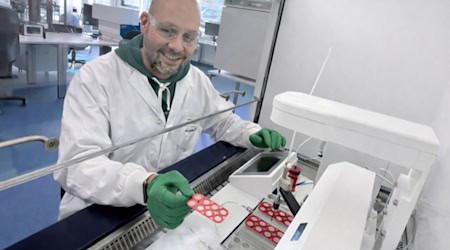
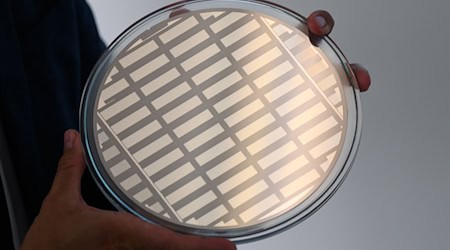
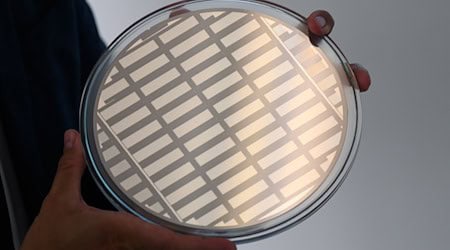
The new measuring adapter from Fraunhofer IPMS Dresden can contact and test up to eight material samples simultaneously. © Fraunhofer IPMS

New measuring adapter accelerates materials research

A new measuring adapter from Dresden is revolutionizing materials research. Researchers at Fraunhofer IPMS can use it to test eight samples simultaneously - a breakthrough for the development of displays, solar cells and sensors. The innovation saves time and accelerates the path to better electronics.
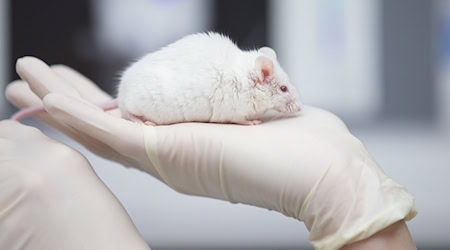
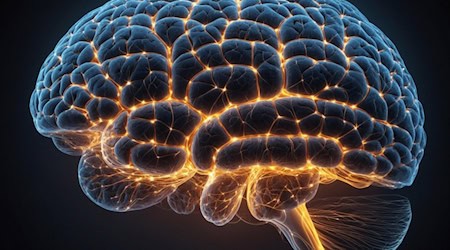
Which brain regions change with age? Mathematics reveals it. © pixabay/Pete Linforth

Leipzig team decodes brain changes with mathematics

Which brain regions change with age? Where does the brain work differently in autism? Researchers from the Max Planck Institute in Leipzig have developed a mathematical method that answers precisely these questions. A new metric identifies 108 regions that are affected by ageing and 27 regions that are altered in autism spectrum disorders. The findings could pave the way for targeted therapies.

Everyone knows water - but under extreme conditions it becomes something completely new. © pixabay/Pexels

Researchers discover new form of water

Water that can conduct electricity extremely well? Researchers from Dresden and Rostock have discovered an exotic form of water that only forms under the most extreme conditions. The findings could explain what happens inside ice giants such as Uranus and Neptune.

Letting our thoughts run free prepares us for difficult situations. pixabay/Gerd Altmann

How imagination trains our brain

Is it possible to find people more likeable through thought alone? Yes, say researchers at the Max Planck Institute for Human Cognitive and Brain Sciences in Leipzig. Their study shows: Imagination changes the brain in a similar way to real experiences. This opens up new opportunities for therapy and relationships.

Sustainable clothing is made from pine needles at WHZ Zwickau. The researchers extract fibers from the material, which was previously considered forest waste. © pixabay/yais gao

Pine needles become clothing: Researchers develop textiles from forest waste

In Saxony's forests, pine needles normally end up unused on the ground and rot. Researchers at WHZ Zwickau are now turning them into sustainable textiles. The "ConFiTex" project is creating completely compostable yarn from local conifer needles - an innovative contribution to the circular economy that shows how forest waste can be turned into fashion.

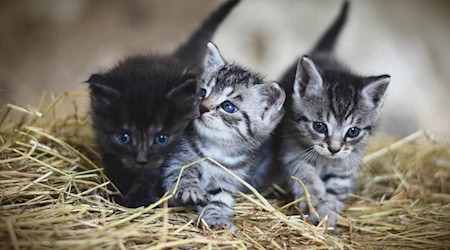
Can cats think? The answers from people around the world are surprising. pixabay congerdesign

Can animals think and feel?

Do animals have feelings? Do they think like us? Researchers from Leipzig University and the Max Planck Institute for Evolutionary Anthropology surveyed over 1,000 children and adults from 15 countries. The surprising result shows that people around the world think similarly about animals. But this view has direct consequences for animal welfare.

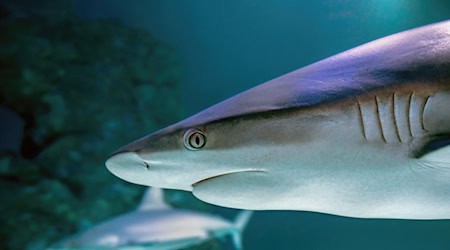
Researchers have now discovered that cell division in shark embryos occurs in a different way. © pixabay/David Clode

The shark's ratchet trick: New mechanism of cell division discovered

How do cells divide when they are too big for the classic mechanism? Researchers at TU Dresden have discovered a surprising trick of nature in zebrafish embryos. A rhythmic alternation between solid and liquid states inside the cell enables division over several cycles. The discovery changes our understanding of one of the most fundamental processes of life.

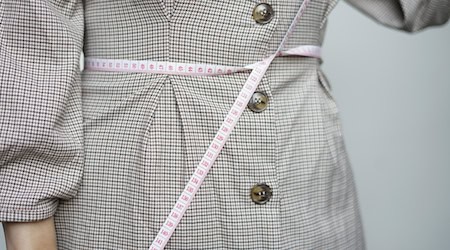
Normal weight does not always mean healthy. A new test from Leipzig shows a hidden risk. © pixabay/Rafif Al Hashmi

Slim and still ill? New index exposes hidden risk

Normal weight does not automatically mean healthy. Researchers in Leipzig have developed a new index that reveals hidden metabolic disorders. The metabolic BMI analyzes the blood and shows: One in three slim people has a greatly increased risk of diabetes and fatty liver. Intestinal bacteria play an important role in this.

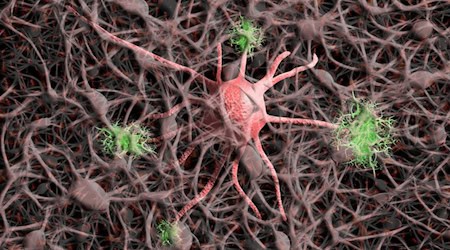
Leipzig researchers have now observed how nerve cells adapt their signal transmission when they are active. © pixabay geralt

Leipzig researchers watch the brain learn

Learning happens in milliseconds - far too fast to observe directly. Researchers at Leipzig University have now refined a method that makes exactly this possible. They freeze nerve cells at lightning speed and can thus see how they transmit signals. The technique works in both mice and humans and could help to better understand diseases and ageing processes in the brain in the future.

The TU Dresden data center already has high-performance computers. Deneb will be added at the end of 2026. Sven Ellger

Dresden gets one of the most powerful AI computers in Germany

Artificial intelligence requires enormous computing power. TU Dresden is therefore planning a new supercomputer. "Deneb" is the name of the system with 184 high-performance chips, which is due to be launched at the end of 2026. Particularly sustainable: 97 percent of the computing heat flows into the district heating network and heats buildings in the surrounding area.

Symbolic image flu / pixabay Mojpe

Sick to work? The body suffers for weeks

Quickly into the office even though you have a cold? A new study by Chemnitz University of Technology shows: Those who work sick pay a high price. The exhaustion lasts for weeks and the body needs much longer to recover than expected. Researchers warn of a dangerous spiral.

How well do you know fairy tales? Now you can test it. © pixabay Ghinzo

How well do you really know the Grimm fairy tales?

Mirror, mirror in the hand - or was it different? A linguist at Chemnitz University of Technology is investigating how well we still know the famous sayings from Grimm's fairy tales. Anyone can take part in a ten-minute survey. The results will be presented to the public.

Brazil nuts not on the snack plate, but in the laboratory. Are they really healthy? © HZDR/B. Schröder

All-clear for Brazil nut fans

Brazil nuts are considered to be selenium bombs, but they also contain radioactive radium. Researchers from Dresden have now measured for the first time how much of it actually ends up in our bodies. The results reassure nut fans.

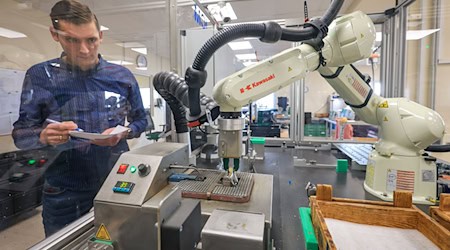
Production manager Ulrich Morawietz monitors the tinning robot at Arnold Electronic in Lichtenau. The family-owned company developed the system together with the Chemnitz Institute of Mechanical and Plant Engineering (ICM) / Photo: Jan Woitas/dpa

Robots and AI find their way into Saxony's SMEs

Robby" has been a permanent member of the team at family business Arnold Electronic since last year. What challenges and opportunities does the use of robots and AI present for smaller companies in Saxony?

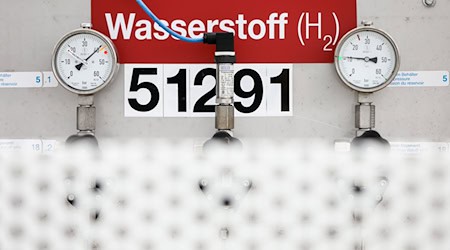
A new hydrogen center for industry has started work in Chemnitz. (Symbolic image) / Photo: Jan Woitas/dpa-Zentralbild/dpa

New hydrogen center starts work in Chemnitz

The federal government is investing up to 290 million euros in four large hydrogen centers. The first has now opened in Chemnitz. Here, companies receive help to test new products and bring them to market maturity.

Saxony's SPD parliamentary group leader Dirk Panter sees the initiative as an important impetus for the economic independence of eastern Germany / Photo: Elisa Schu/dpa

Start-ups in Saxony and Thuringia set to double

Saxony and Thuringia want to double the number of high-tech start-ups with a new initiative. From October, several million euros will flow into a network designed to position the East internationally.

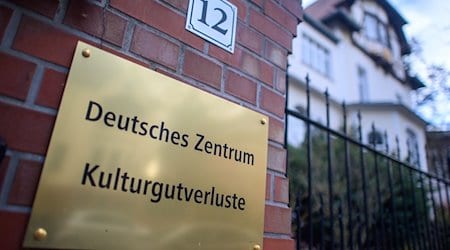
Books by Raoul Fernand Jellinek-Mercedes. Nazi-looted property from Saxon libraries returned to Jewish heirs / Photo: Ramona Ahlers-Bergner/Sächsische Landesbibliothek/dpa

Saxon libraries return Nazi-looted property

Provenance researchers have been searching for unlawful cultural property in libraries and archives for years. This is funded by the federal and state governments - and now there have been hits again in Saxony.

The planned federal construction research center with locations in Thuringia and Saxony is anchored in the coalition agreement between the CDU/CSU and SPD (symbolic image). / Photo: Martin Schutt/dpa

Schneider: Federal Building Research Center is coming

A new federal center is to conduct research into resource-conserving, climate-friendly construction. The project, which was already planned under the traffic light coalition, has made it into the coalition agreement between the CDU/CSU and SPD.

Dresden researchers have gained new insights into autism. (Photo illustration) / Photo: Sebastian Gollnow/dpa

Dresden researchers with new findings on autism

People with autism find it difficult to perceive and process environmental and sensory stimuli. The developmental disorder is diagnosed even in young children. Research aims to help those affected.

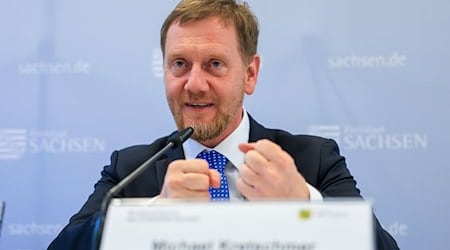
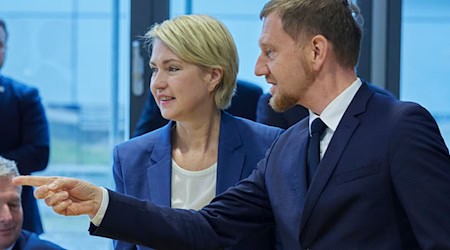
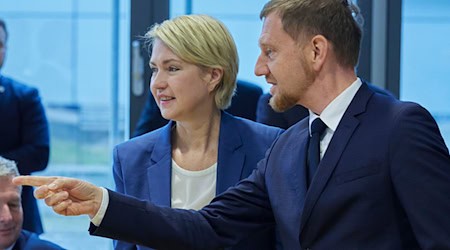
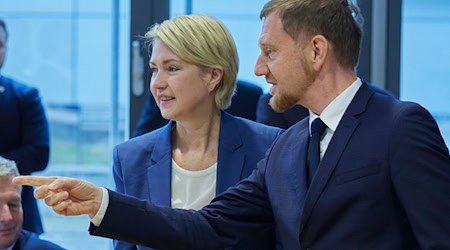
During a visit to Mecklenburg-Western Pomerania, Saxony's Minister President Michael Kretschmer (CDU) wants to talk to his counterpart Manuela Schwesig about tourism development and research cooperation, among other things / Photo: Jörg Carstensen/dpa

MV and Saxony want to intensify cooperation

The joy over new World Heritage sites in both federal states is still reverberating. However, the heads of government of Mecklenburg-Western Pomerania and Saxony are also looking to the future.

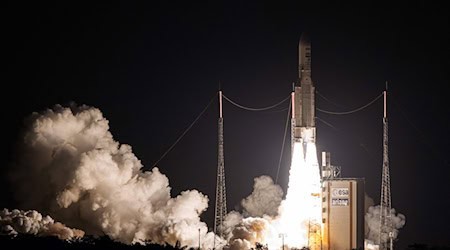
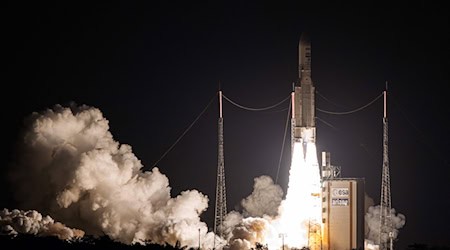
A European Ariane 5 launcher lifts off from the spaceport in Kourou, French Guiana / Photo: Jody Amiet/AFP/dpa

Into space via Freiberg: new space technology subject at university

Space technology can also be studied at the TU Bergakademie Freiberg in future. With the bachelor's degree course in Space Resources, the world's first mining university is breaking new ground in Germany, according to information released on Thursday. Interested students can enrol from mid-June - an ..

A European Ariane 5 launcher lifts off from the spaceport in Kourou, French Guiana / Photo: Jody Amiet/AFP/dpa

Into space via Freiberg: new space technology subject at university

Space technology can also be studied at the TU Bergakademie Freiberg in future. With the bachelor's degree course in Space Resources, the world's first mining university is breaking new ground in Germany, according to information released on Thursday. Interested students can enrol from mid-June - an ..

A European Ariane 5 launcher lifts off from the spaceport in Kourou, French Guiana / Photo: Jody Amiet/AFP/dpa

Into space via Freiberg: new space technology subject at university

Space technology can also be studied at the TU Bergakademie Freiberg in future. With the Space Resources Bachelor's degree course, the world's first mining university is breaking new ground in Germany, according to information released on Thursday. Interested students can enrol from June 1 - and lea ..

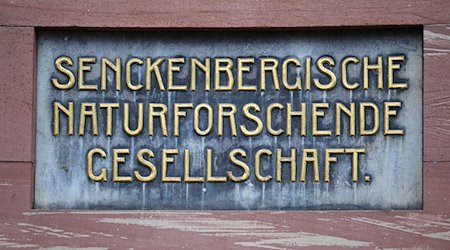
A plaque with the inscription "Senckenbergische Naturforschende Gesellschaft" is embedded in the façade at the entrance to the Senckenberg Museum. / Photo: Arne Dedert/dpa

Mobile stations to bring research work closer

The Senckenberg Natural History Collections Dresden want to arouse interest in their research with mobile research stations. From April to September, two research bikes will provide information on various topics at different locations in Dresden on five Saturdays, as a spokeswoman announced on Frida ..

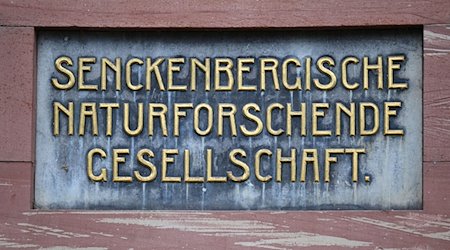
A plaque with the inscription "Senckenbergische Naturforschende Gesellschaft" is embedded in the façade at the entrance to the Senckenberg Museum. / Photo: Arne Dedert/dpa

Mobile stations to bring research work closer

The Senckenberg Natural History Collections Dresden want to arouse interest in their research with mobile research stations. From April to September, two research bikes will provide information on various topics at different locations in Dresden on five Saturdays, as a spokeswoman announced on Frida ..

View of the campus at BTU - Brandenburg University of Technology Cottbus-Senftenberg / Photo: Patrick Pleul/dpa/Archivbild

Great interest from scientists at Cottbus University

The relatively small BTU university in Cottbus is increasingly developing into a center for research into future topics. The institution also wants to cooperate in the planned medical training program - and brings its own unique expertise to the table.