Whether we are learning to ride a bike, memorizing names or practicing new movements - our brain is constantly adapting. But how exactly this works at the level of nerve cells has been difficult to observe until now. Researchers at the Carl Ludwig Institute of Physiology at Leipzig University, together with colleagues from Johns Hopkins University in the USA, have now achieved an important breakthrough. For the first time, they can directly observe how nerve cells work during learning.
The scientists use a technique called "zap-and-freeze". This involves electrically stimulating nerve cells and shock-freezing them a few milliseconds later. This allows movements of tiny cell components to be captured under an electron microscope. The method already existed for cultured nerve cells in the laboratory. What is new is that it now also works with intact brain tissue - both in mice and in humans.
Messenger substances are recycled
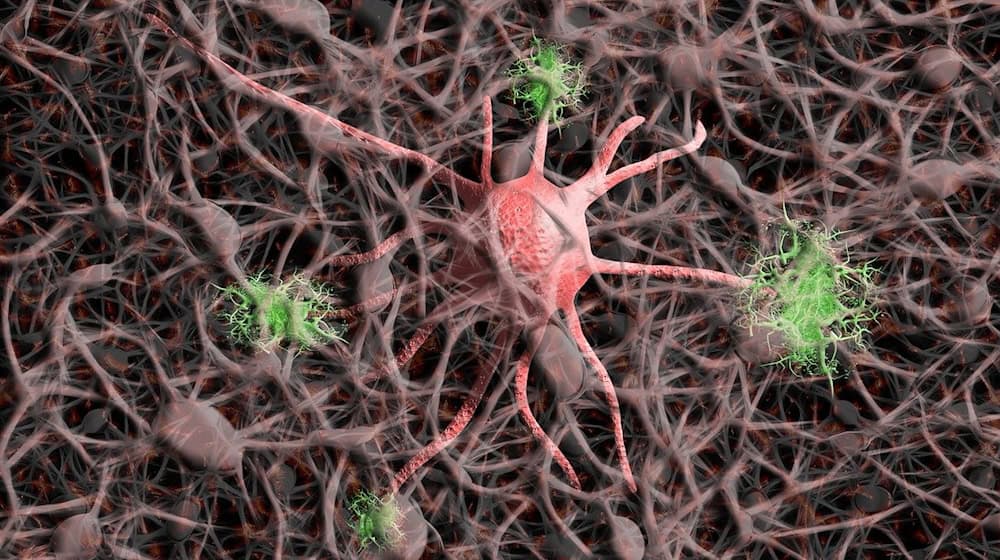
The researchers first examined brain samples from mice. They observed how small vesicles in the nerve cells release messenger substances and are then recycled. These so-called vesicles are crucial for the transmission of information from cell to cell. Without them, neither learning nor memory formation would work.
The researchers then applied the method to human brain tissue. The result surprised them positively. The process was the same as in mice. In both cases, they found the protein Dynamin1xA at the sites where the vesicles are recycled. "This allowed us to directly follow for the first time how the cell membrane in the human brain quickly renews itself after the release of neurotransmitters," says Dr. Kristina Lippmann from the Carl Ludwig Institute at Leipzig University. She adds that this method can be used to observe brain cells as they learn.
Important for research into ageing and diseases
At the Carl Ludwig Institute in Leipzig, experience with special microscopy techniques played an important role. The researchers there have adapted and refined the method for brain slices. They discovered that the technique is particularly suitable for stimulating certain nerve fibers. They were also able to demonstrate that an important learning mechanism can be triggered.
In future, the scientists want to use the technique to investigate how the cerebellum works. This part of the brain controls our movements. The findings could help to understand how the brain changes with age or what goes wrong during illness. The results of the study were published in the renowned scientific journal Neuron.