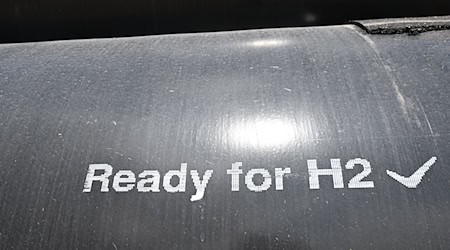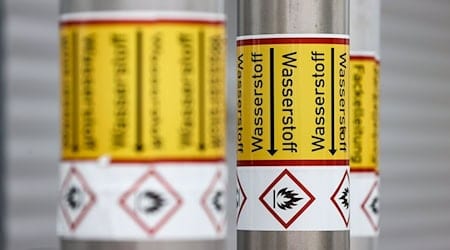

High energy prices are a burden on households and companies. At the same time, industry needs to become climate-neutral. Hydrogen is seen as a solution. But the technology is expensive and consumes a lot of energy. Valuable materials for the necessary processes often end up as waste. Researchers from Saxony want to change this.
Researchers from the Technical Universities of Dresden, Chemnitz and Freiberg and the Dresden University of Applied Sciences have now met with Minister President Michael Kretschmer in Dresden. The focus of the meeting at TU Dresden was the "Hy²Cycle" project. The Saxon scientists want to jointly develop fuel cells and electrolysers that can be reused. "Hydrogen is and will remain an energy source of the future and a central building block for the climate-neutral transformation," said Kretschmer.
Each university has its task
Electrolysers split water into hydrogen and oxygen. Fuel cells generate electricity from hydrogen. Both are needed for the energy transition. TU Dresden and HTW Dresden are building a fuel cell and an electrolyzer that can be recycled. They are building a test facility for this purpose. The components should work efficiently and consume few raw materials.
The TU Chemnitz is testing the systems. The researchers there are testing whether the materials last a long time and measuring where energy is lost. The TU Bergakademie Freiberg is concerned with recycling. It is researching how to dismantle old fuel cells. The cells contain expensive materials such as platinum. These are to be reused. Harmful chemicals must be destroyed.
New jobs for Saxony
The Saxon Hydrogen Union has been in existence since 2022. It pools the knowledge of the three technical universities. The research is intended to help industry. "Together with our partner universities, we are creating scientific foundations, technological solutions and thus also a basis for innovative start-ups, which are of central importance for a climate-neutral industry and sustainable value creation in the Free State of Saxony," explains Prof. Angela Rösen-Wolff, Vice-Rector for Research and Transfer at TU Dresden.
The project is funded by the EU. The findings will flow into products. This will benefit companies in the region. Saxony should become visible as a location for the circular economy.