loading

Повідомлення завантажено...

Опубліковано з publizer® у Саксонії

Новини на #TU Dresden

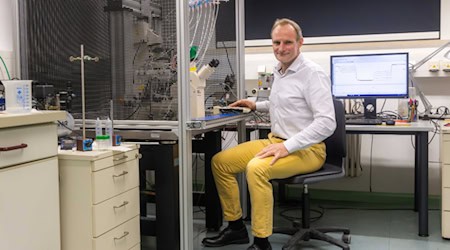
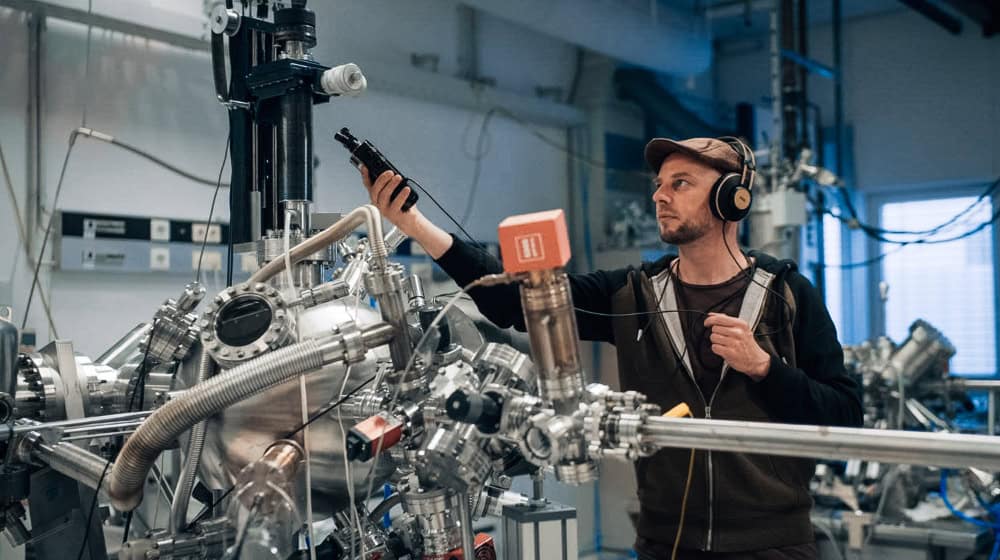
Dresden loop artist Konrad Kuechenmeister captures the sounds of quantum research. Music is created from the sounds of the labs. Tobias Ritz

Quantum vibe from the lab: Dresden musician makes research audible

A Dresden musician makes audible what quantum researchers are working on. Konrad Kuechenmeister has recorded the noises from laboratories at TU Dresden and the University of Würzburg and mixed them into a soundtrack. The loop music accompanies the Cluster of Excellence ctd.qmat into a new phase. With a focus on dynamics, 300 scientists want to develop quantum materials for green technologies and quantum computers.
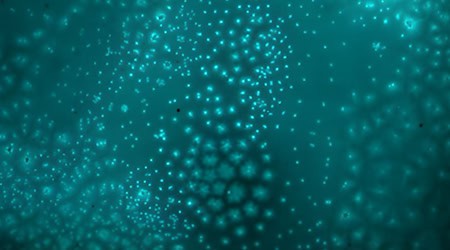
Star-shaped structures of microtubules divide the cell material in early embryos. Researchers at TU Dresden have investigated how this process works. Melissa Rinaldin

Chaos as a blueprint: How a cell becomes an organism

Every human being begins as a single cell. Researchers at TU Dresden have now deciphered how this becomes a complete organism. Their discovery: the first cell divisions function through controlled chaos. Thread-like structures called microtubules divide the cell material - although they are actually unstable. The study published in Nature also shows why different animal species use different developmental strategies.

Prof. Dr. Michael © Schaefer and his team developed light-controlled switches for bodily functions. University of Leipzig/Swen Reichhold

Saxon researchers switch bodily functions on and off with light

Violet light on, blue light off: Researchers at Leipzig University and TU Dresden have developed molecular switches that control bodily functions using light pulses. The scientists can use them to activate nerve cells, regulate adrenaline release and control intestinal movements. The new method could help to better understand diseases and develop new therapies.

Quick help is needed in the event of a stroke. In the days that follow, some people suffer a second one. A new therapy should help. © pixabay/Alexander Fox | PlaNet Fox

Dresden doctors test new therapy against second stroke

Around one in three stroke patients suffers a relapse - often just a few days after the initial cerebral infarction. Doctors at TU Dresden are now starting a large nationwide study with 2,100 participants. They want to find out whether a combination of two drugs provides better protection against a second stroke than the current standard therapy. The Federal Ministry of Research is funding the project with three million euros.

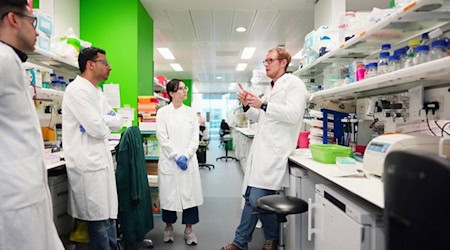
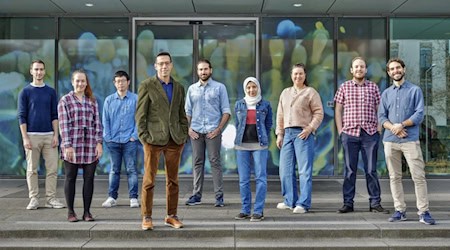
Benjamin Schumann (right) with his team at the Crick Institute. Today he is Professor of Biochemistry at the TU Dresden.  © PR/Michael Bowles

Sweet signals decoded: Biochemists track cell communication

How do cells talk to each other? A team at TU Dresden has succeeded in making the most important sensors on the cell surface visible for the first time. The so-called proteoglycans receive signals and control how cells grow and react. The new method could help to better understand cancer and develop new therapies in the future.

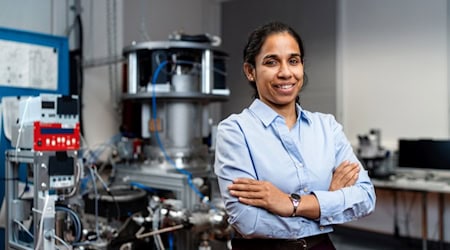
Aparajita Singha uses diamonds with defects as sensors at TU Dresden to measure magnetic signals of individual atoms. © TUD/Tobias Ritz

How flawed diamonds are advancing quantum technology

Diamonds with flaws as a tool for science: the new professor Aparajita Singha at TU Dresden uses special diamond sensors to measure magnetic signals from individual atoms. Her ambitious goal for the next five years is to carry out these measurements at room temperature - something that no one else in the world has yet managed to do. Her research in the Cluster of Excellence ctd.qmat is an important basis for future quantum computers and strengthens Saxony's position in quantum technology.

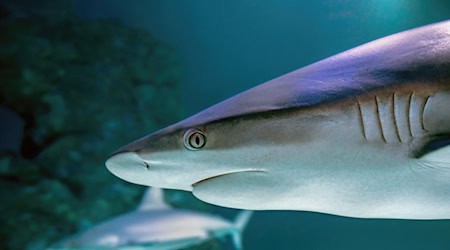
Researchers have now discovered that cell division in shark embryos occurs in a different way. © pixabay/David Clode

The shark's ratchet trick: New mechanism of cell division discovered

How do cells divide when they are too big for the classic mechanism? Researchers at TU Dresden have discovered a surprising trick of nature in zebrafish embryos. A rhythmic alternation between solid and liquid states inside the cell enables division over several cycles. The discovery changes our understanding of one of the most fundamental processes of life.

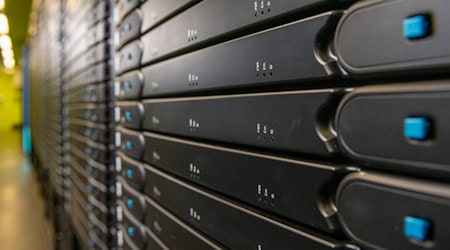
The TU Dresden data center already has high-performance computers. Deneb will be added at the end of 2026. Sven Ellger

Dresden gets one of the most powerful AI computers in Germany

Artificial intelligence requires enormous computing power. TU Dresden is therefore planning a new supercomputer. "Deneb" is the name of the system with 184 high-performance chips, which is due to be launched at the end of 2026. Particularly sustainable: 97 percent of the computing heat flows into the district heating network and heats buildings in the surrounding area.

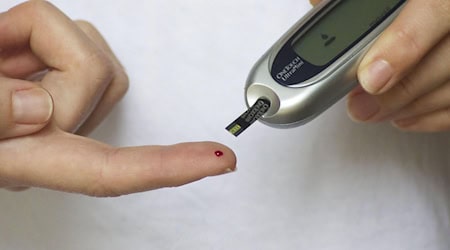
Diabetes patients need to measure their blood sugar regularly. But even with prediabetes, the values play an important role in heart health.

Lowering blood sugar halves the risk of heart attack in prediabetes

More than one in five adults has elevated blood sugar levels. A new study by TU Dresden and King's College London now shows how important it is to normalize them. Those who bring their blood sugar back to normal levels halve their risk of serious heart disease. The research questions previous assumptions in preventive medicine.

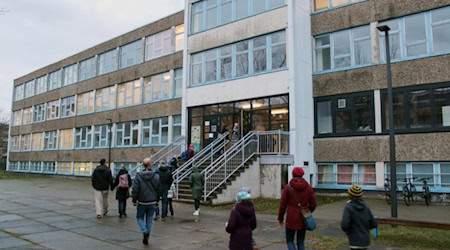
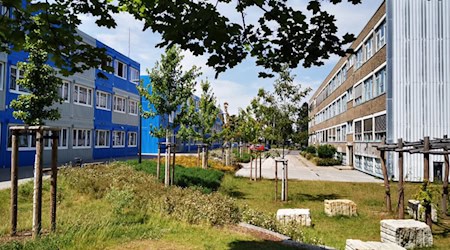
Pupils at Dresden University School have been studying in an old GDR building since 2019 and in an additional container building since 2022. Capacities are once again overstretched. Photo: Jeremy Göhler for Dresden University School

New building for Dresden University School delayed - Structural Commission sounds the alarm

Once again, the planned start of construction for a learning building for Dresden University School has been postponed. The current situation has prompted a public statement from the Dresden University School's Structure and Evaluation Commission. Until the new building planned for 2029/30 is completed, the committee criticizes that research and learning are suffering under precarious conditions.

Pupils at Dresden University School have been studying in an old GDR building since 2019 and in an additional container building since 2022. Capacities are once again overstretched. Photo: Jeremy Göhler for Dresden University School

Learning center for Dresden University School delayed - structural commission sounds the alarm

Once again, the planned start of construction for a learning building for Dresden University School has been postponed. The current situation has prompted a public statement from the Dresden University School's Structure and Evaluation Commission. Until the new building planned for 2029/30 is completed, the committee criticizes that research and learning are suffering under precarious conditions.

"The motivation for change and further development is unbroken." - Dresden University School trial starts its sixth year

In the 2024/25 school year, around 830 students in grades 1 to 10 from the entire Dresden city area and neighboring communities will attend the Dresden University School. Innovative teaching-learning formats and a contemporary school organization are being tested and researched in the school trial by the Technische Universität Dresden (TUD) and the city of Dresden. The focus of school development is now moving away from the organization of teaching in the younger grades towards the development of structures in the final grades. For the second time in the school's young history, final examinations will be held in the beginning school year, and for the first time, the young people in the qualification level will also be preparing for the Realschule examination. The integration of the Ukrainian pupils and teachers into the school community is also progressing.

Maria Völzer

In-depth career orientation and first degrees - Dresden University School starts 5th school year

At Dresden University School, 720 students have started the new school year. As in previous years, the size of the school community not only changes with each new school year, but further components of the school concept are implemented. In the 2023/24 school year, this is particularly the early career orientation with the PRALL project and the continuation of the youth school in the Old Brickworks in Prohlis. The first grades for grade 9 and integration of Ukrainian children and young people into the student body are also on the agenda.