loading

Messages are loaded...

News about #model

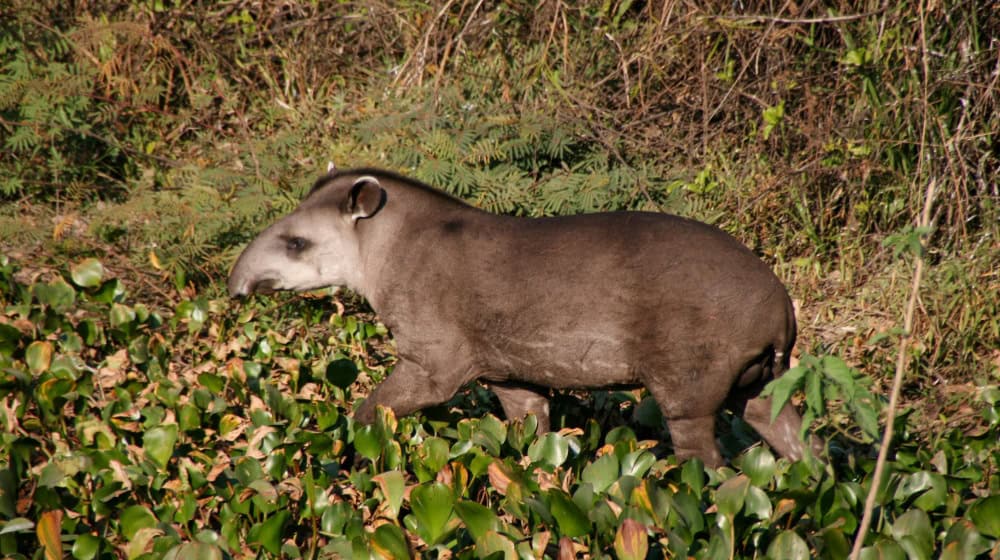
Lowland tapir in the Pantanal: The researchers in Görlitz use movement data of such animals to better assess their chances of survival. M. Zanferrari/Wikimedia Commons, CC BY-SA 2.0

How animal movements influence the survival of entire species

A new road cuts through the habitat of endangered tapirs. Will the population survive? Researchers from CASUS in Görlitz have developed a new model with Brazilian colleagues that can answer such questions. For the first time, it links the movement patterns of individual animals with the dynamics of entire populations - an important step for species conservation.
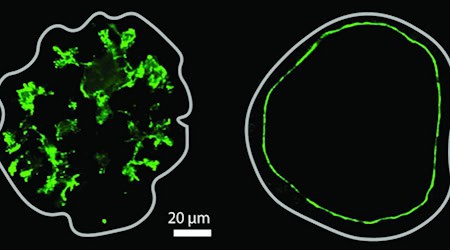
This is what cavities in the pancreas look like under the microscope: star-shaped branching on the left, round on the right. The green coloring shows the inner walls. Byung Ho Lee et al / MPI-CBG / Nature 2025

When cells exert pressure: how the pancreas grows

How does the branched network of cavities in our pancreas develop? Researchers at the Max Planck Institute of Molecular Cell Biology and Genetics in Dresden have found out using mini-organs and computer simulations. Their findings could pave the way for new therapies.

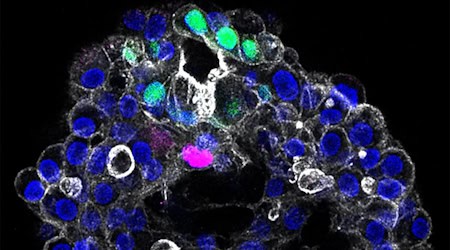
The mini-liver from the petri dish, with the three most important cell types of the liver: portal fibroblasts (magenta), cholangiocytes (green) and hepatocyte nuclei (blue).  Lei Yuan, Sagarika Dawka, Yohan Kim, Anke Liebert et al. / Nature (2025) / MPI-CBG

Mini livers from the petri dish to help patients

Over two million people die of liver disease every year. Researchers at the Max Planck Institute in Dresden have now developed a three-dimensional liver model from real patient cells. The mini-liver can mimic important functions and should help to better understand diseases, test new drugs and develop personalized therapies. The study was published in Nature.