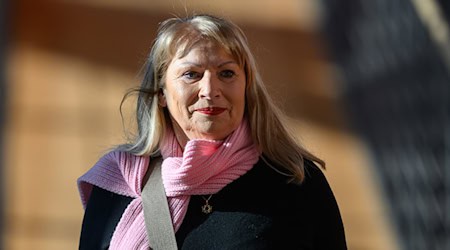

The head of the Joint Poison Control Center (GGIZ) of several countries strongly advises against wasting time with artificial intelligence and your own internet research in acute situations. "We are increasingly noticing that people are now relying more on AI when something happens, even if it involves children," says Dagmar Prasa.
"If a child swallows something, the AI is first asked whether poisoning is possible - we hear this again and again and we want to warn against it," the human toxicologist continues. The AI also only has the knowledge available on the internet.
"Are green peas poisonous?"
The AI can also derive incorrect information from this. "It often says that green peas are poisonous, for example, or the information is not read correctly or the wrong conclusions are drawn from it," explains Prasa. Searching for information online on your own can also cost valuable time in an emergency. "Some people spend fifteen minutes on the internet first."
Even if the situation is unclear, Prasa recommends calling the poison control center directly if something happens. "In most cases, it ends up being harmless, but it can also be something serious, in which case you lose time googling. We can decide whether something needs to be done immediately."
Preliminary research can help
In contrast, it makes sense for parents to obtain general information on reputable websites about which household products could be dangerous for children and lead to poisoning.
Of the more than 25,200 consultations carried out by doctors and pharmacists via the Poison Helpline this year up to the first days of December, 27 percent were about children, according to the GGIZ.
The poison emergency center based in Erfurt was founded by the states of Thuringia, Saxony, Saxony-Anhalt and Mecklenburg-Western Pomerania in 1994. It can be reached on the poison emergency number 0361-730730. It is mainly private individuals who call the poison emergency number, but also hospitals. As a rule, there are no doctors specializing in poisoning at normal clinics, explains Prasa.
The GGIZ experts received around 7,680 calls from Saxony this year up to the beginning of December. The experts advised almost 3,680 callers from Thuringia, around 3,180 from Saxony-Anhalt and almost 2,600 from Mecklenburg-Western Pomerania. However, calls also came in from other federal states.
Copyright 2025, dpa (www.dpa.de). All rights reserved