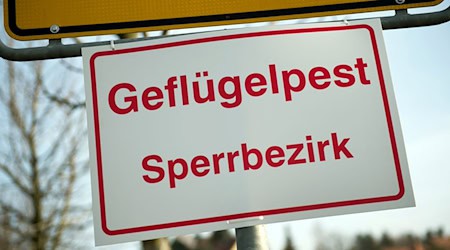
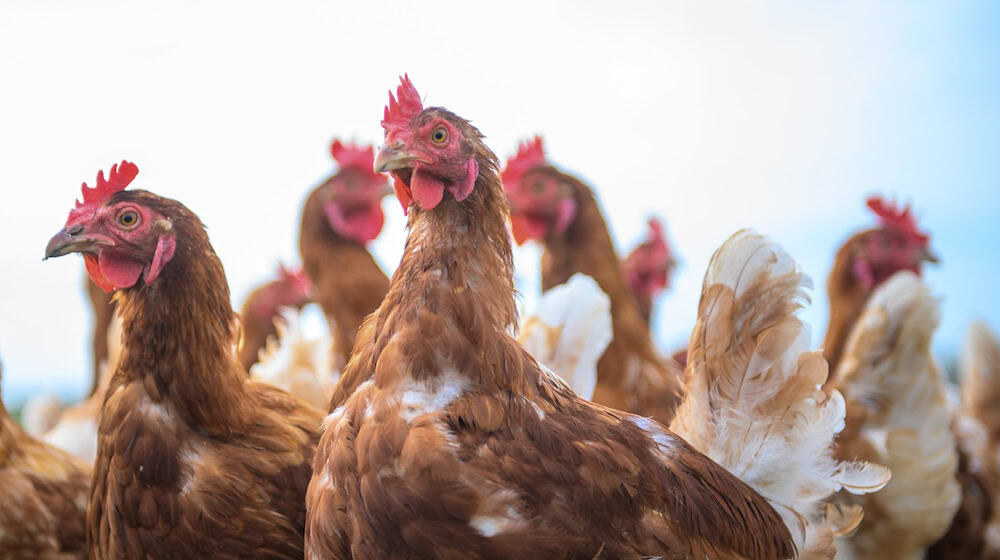
After a new outbreak of avian influenza on a large farm in Ebersbach near Radeburg in the district of Meißen, the entire livestock must be killed. Around 310,000 more animals are affected, according to the Saxon Ministry of Social Affairs. Outbreaks had previously been confirmed in around 80,000 laying hens and later a further 40,000. With evidence of a third outbreak in a further barn, "an exception to the culling requirement stipulated in EU animal health law is no longer possible", it said.
The decision was made by the veterinary office of the district of Meißen following a comprehensive risk assessment. It was supported by a team from the Friedrich Loeffler Institute and the State Animal Disease Control Center. Culling, cleaning and disinfection are carried out by a service provider contracted by the Ministry of Social Affairs.
No alternative
"This new outbreak and the necessary measures are very bitter for the people and animals on the poultry farm in the district of Meißen," said Social Affairs Minister Petra Köpping (SPD). It is the largest laying hen farm in Saxony and one of the largest in Germany. "The experts did not take the decision to kill the entire flock lightly," emphasized Köpping. However, there was no alternative from an animal health perspective.
A protection zone and a surveillance zone were designated due to the outbreak, which extend into the district of Bautzen and the city of Dresden. In the entire district of Meißen, poultry farms with more than 50 animals are still required to keep their poultry in confinement and poultry exhibitions and markets are prohibited. Smaller holdings are also strongly recommended to keep their poultry confined.
Wave of outbreaks throughout the Free State
There had already been further cases of avian influenza in Saxony. In November, 8,000 turkeys were affected in the district of Meißen, and in mid-December, 6,500 animals were killed in a goose farm in the district of Leipzig. At Leipzig Zoo, a further seven animals had to be killed after a pelican fell ill. In addition, the virus was detected in around 30 wild birds that died in the state.
Copyright 2025, dpa (www.dpa.de). All rights reserved