loading

Powěsće so přeprošuja...

News zu #AI

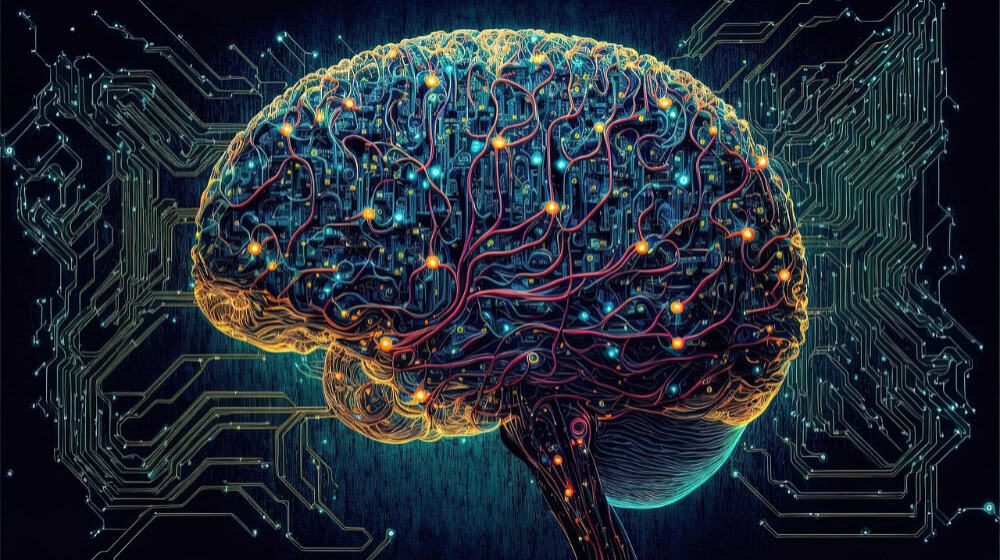
The human brain automates routines and thus saves energy. Researchers at Chemnitz University of Technology now want to transfer this principle to artificial intelligence. © pixabay/Kohji Asakawa

How our brain makes artificial intelligence smarter

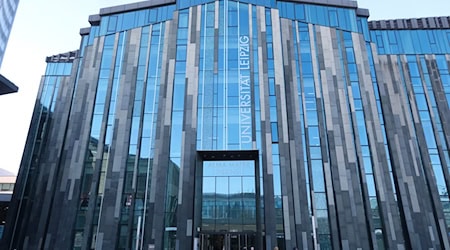
Researchers at Chemnitz University of Technology and the University of Magdeburg are working on a new approach to artificial intelligence. Their model: the human brain and its ability to develop habits. AI systems should learn to automate routine tasks - and consume significantly less energy in the process.
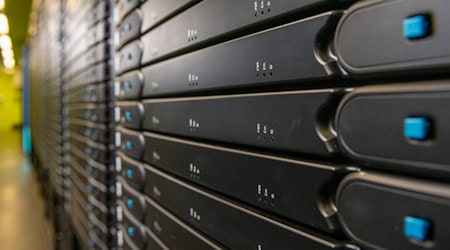
The TU Dresden data center already has high-performance computers. Deneb will be added at the end of 2026. Sven Ellger

Dresden gets one of the most powerful AI computers in Germany

Artificial intelligence requires enormous computing power. TU Dresden is therefore planning a new supercomputer. "Deneb" is the name of the system with 184 high-performance chips, which is due to be launched at the end of 2026. Particularly sustainable: 97 percent of the computing heat flows into the district heating network and heats buildings in the surrounding area.

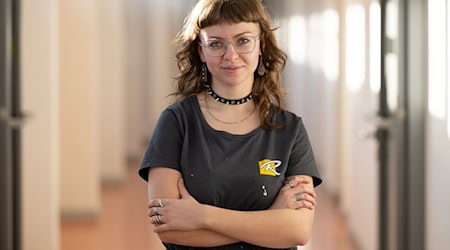
Paulina Ließner is in her second year of training as a painter and varnisher at a company in Dresden / Photo: Sebastian Kahnert/dpa

"Everyone needs craftsmen"

Paulina Ließner prefers a paintbrush to a laptop. Across Saxony, interest in apprenticeships in the skilled trades is on the rise - despite digitalization and AI. Or is that precisely why?

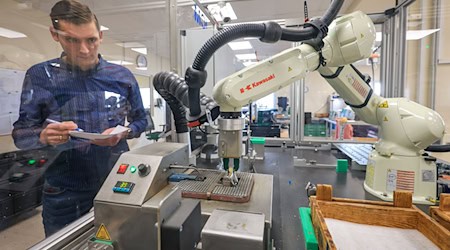
Production manager Ulrich Morawietz monitors the tinning robot at Arnold Electronic in Lichtenau. The family-owned company developed the system together with the Chemnitz Institute of Mechanical and Plant Engineering (ICM) / Photo: Jan Woitas/dpa

Robots and AI find their way into Saxony's SMEs

Robby" has been a permanent member of the team at family business Arnold Electronic since last year. What challenges and opportunities does the use of robots and AI present for smaller companies in Saxony?